Exploring HPL Anti-Static Raised Floor for Data Centers and Technical Environments
In data centers, server rooms, control rooms, cleanrooms, laboratories, communication rooms, and high-tech facilities, flooring is not just a decorative surface. It plays an important role in electrostatic discharge protection, cable management, airflow distribution, equipment safety, load-bearing performance, maintenance access, and long-term operational reliability.
Traditional floors may not provide the required protection against electrostatic discharge, also known as ESD. Static electricity can damage sensitive electronic components, interrupt data operations, increase downtime risk, and create safety concerns for personnel working around IT equipment.
HPL anti-static raised floors provide a practical solution by combining a durable high-pressure laminate surface with a modular raised access floor system. They are designed to dissipate static charges, support heavy equipment, organize underfloor cables, improve cooling airflow, and provide easy access for future maintenance.
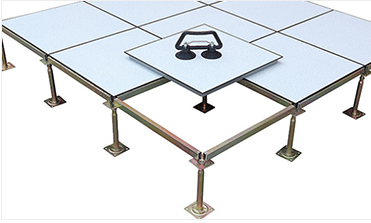
What Is an HPL Anti-Static Raised Floor?
An HPL anti-static raised floor is a modular access flooring system finished with anti-static high-pressure laminate. The panel is typically supported by adjustable pedestals and, in many projects, stringers. The raised void beneath the panels can be used for power cables, data cables, cooling airflow, communication lines, fire protection systems, and maintenance access.
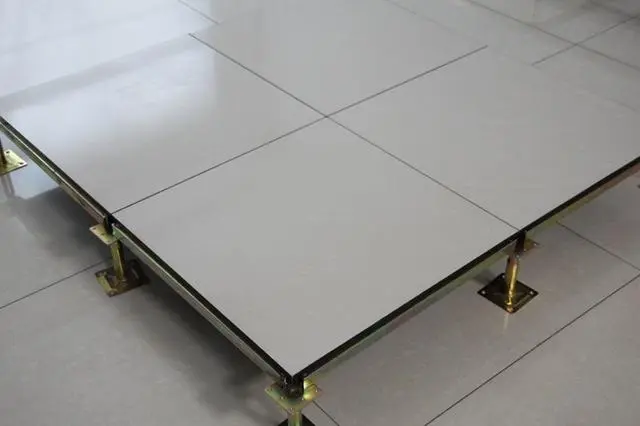
The HPL surface is engineered to provide wear resistance, stain resistance, cleanability, and static control. Depending on the product design, the panel core may be made from steel cementitious core, calcium sulphate, woodcore, aluminum, or other raised floor materials. The correct system should be selected according to load requirements, ESD performance, fire rating, airflow design, and project standards.
Why Anti-Static Flooring Matters in Data Centers
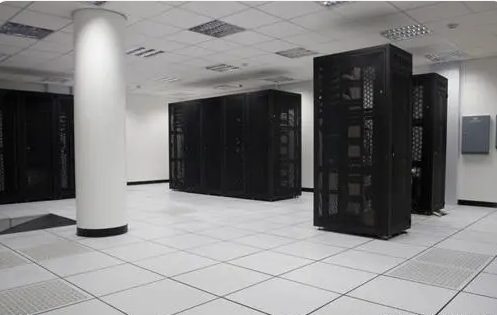
Data centers and server rooms contain sensitive electronic equipment that can be affected by electrostatic discharge. Even small static events may contribute to equipment malfunction, data interruption, component damage, and hidden reliability problems. Anti-static raised flooring helps create a controlled path for static charge dissipation when properly installed, grounded, and maintained.
In addition to ESD control, raised access floors help organize high-density cabling, support underfloor air distribution, allow flexible equipment layout changes, and provide technicians with access to service infrastructure without major demolition.
Basic Structure of HPL Anti-Static Raised Floor Panels
| Component | Common Material | Main Function |
| Surface Finish | Anti-static HPL | Provides static control, wear resistance, stain resistance, and easy cleaning |
| Panel Core | Steel cementitious core, calcium sulphate, woodcore, or aluminum core | Provides structural strength, load capacity, stability, and fire-performance potential |
| Bottom Sheet | Steel sheet, galvanized steel, aluminum, or balancing layer | Improves panel strength, stability, and structural balance |
| Edge Trim | Conductive PVC edge trim, black edge trim, integral trim, or trimless edge | Protects panel edges and helps support clean installation detail |
| Pedestal System | Adjustable steel pedestal | Supports panel height, level adjustment, and underfloor space |
| Stringer System | Steel stringer or aluminum stringer | Improves lateral stability and load distribution where required |
How HPL Anti-Static Raised Floors Work
Static Dissipation Through the Flooring System
The anti-static HPL surface helps control static charge buildup. When the raised floor system is properly connected to grounding points, static charges can be dissipated through the floor surface, panel structure, pedestal system, conductive edge details, and grounding network.
For sensitive equipment environments, the floor should not be evaluated only by surface appearance. Electrical resistance, grounding design, continuity, installation quality, and regular ESD testing are all important for long-term protection.
Anti-Static HPL Surface Layer
HPL is made by pressing resin-impregnated paper layers under high temperature and high pressure. For anti-static raised floor applications, the HPL finish is engineered with static-control properties while maintaining durability, abrasion resistance, cleaning resistance, and decorative appearance.
Grounding and Electrical Continuity
Grounding is critical for access floor systems used in ESD-sensitive environments. The raised floor should be connected to the building grounding system by qualified electrical professionals according to local codes, project specifications, and applicable ESD control requirements.
Traditional Raised Floor vs HPL Anti-Static Raised Floor
| Comparison Item | Traditional Raised Floor | HPL Anti-Static Raised Floor |
| Main Function | Creates underfloor space for cables and services | Combines underfloor access with ESD protection and durable surface performance |
| Static Control | May not provide reliable anti-static performance | Designed to dissipate static charge when properly grounded and tested |
| Surface Durability | Depends on floor finish | HPL finish provides wear resistance, stain resistance, and easy cleaning |
| Best Use | General offices and cable management spaces | Data centers, server rooms, control rooms, laboratories, cleanrooms, telecom rooms |
| Maintenance Focus | Panel leveling, surface cleaning, cable access | Cleaning, grounding continuity, ESD testing, panel stability, cable access |
Key Benefits of HPL Anti-Static Raised Floors
Electrostatic Discharge Protection
The main advantage of HPL anti-static raised flooring is ESD protection. By helping dissipate static electricity, the floor reduces the risk of electrostatic discharge events that may affect servers, switches, storage systems, communication devices, laboratory instruments, and sensitive electronic equipment.
Improved Cable Management
Raised floors create a hidden underfloor space for power cables, data cables, fiber optic cables, control wiring, and communication systems. This helps keep data centers and server rooms organized, flexible, and easier to maintain.
Better Cooling and Airflow Control
In many data center designs, the raised floor void supports underfloor air distribution. Perforated panels, airflow panels, and grilles can be arranged to deliver cooling air to server racks and high-density equipment zones.
High Load-Bearing Performance
Data centers require flooring systems that can support cabinets, servers, UPS equipment, battery systems, rolling loads, maintenance carts, and concentrated equipment loads. HPL anti-static raised floors should be specified according to concentrated load, uniform load, rolling load, ultimate load, and safety factor requirements.
Modular Access and Easy Maintenance
Raised floor panels can be removed for cable changes, equipment upgrades, underfloor inspection, and maintenance work. This modular structure is especially valuable in data centers where infrastructure changes are frequent.
Durable and Easy-to-Clean HPL Finish
The HPL finish provides a hard, wear-resistant, and cleanable surface. It resists stains, light impact, abrasion, and routine cleaning, making it suitable for technical environments that require both performance and professional appearance.
Common Types of Anti-Static Raised Floor Panels
| Panel Type | Main Features | Typical Applications |
| Steel Cementitious HPL Raised Floor | Steel shell, cementitious infill, anti-static HPL finish, good strength and stability | Data centers, server rooms, control rooms, communication rooms |
| Calcium Sulphate HPL Raised Floor | High-density calcium sulphate core, HPL surface, strong dimensional stability | Data centers, cleanrooms, offices, technical rooms |
| Woodcore HPL Raised Floor | Engineered wood core, HPL finish, economical access floor option | Office buildings, control areas, general cable management spaces |
| Aluminum HPL Raised Floor | Lightweight, corrosion-resistant, strong technical performance potential | Cleanrooms, laboratories, semiconductor facilities, high-tech manufacturing |
| Perforated Airflow Panel | Open area design supports cooling airflow | Cold aisles, high-density server zones, equipment cooling areas |
HPL Finish vs PVC Finish vs Ceramic Finish
| Finish Type | Advantages | Limitations | Best Use |
| Anti-Static HPL | Durable, wear-resistant, easy to clean, stable appearance, common for data centers | Requires correct grounding and ESD testing; edges and joints must be maintained | Data centers, server rooms, control rooms, technical offices |
| Conductive PVC | Good static control, softer walking feel, common in ESD flooring systems | May require more careful maintenance and replacement depending on traffic | Electronics workshops, cleanrooms, control areas, anti-static rooms |
| Ceramic Finish | High wear resistance, hard surface, strong cleaning resistance | Heavier and may be less flexible for some maintenance environments | High-traffic technical areas, selected industrial or public facility spaces |
Applications of HPL Anti-Static Raised Floors
Data Centers and Server Rooms
HPL anti-static raised floors are widely used in data centers and server rooms because they combine ESD protection, cable management, airflow flexibility, structural load support, and modular maintenance access. They are suitable for server racks, network equipment, storage systems, UPS rooms, and IT operations areas.
Control Rooms and Command Centers
Control rooms and command centers require stable flooring for electrical systems, monitoring equipment, control consoles, and communication cables. Anti-static raised flooring helps protect equipment while keeping the room organized and serviceable.
Laboratories and Cleanrooms
Laboratories, cleanrooms, semiconductor facilities, and electronic assembly spaces often require static control, easy cleaning, and stable flooring. HPL anti-static raised floors can be selected where the project requires access flooring with anti-static performance and clean surface maintenance.
Telecommunication and Communication Rooms
Telecommunication rooms and communication centers contain network equipment, switching systems, fiber optic cabling, and electrical infrastructure. Raised floors make cabling easier to organize and upgrade while anti-static finishes help reduce static risk.
Important Performance Factors to Check Before Buying
| Performance Factor | What to Check | Why It Matters |
| ESD Resistance | Surface resistance, point-to-point resistance, resistance to ground, test method, test report | Confirms whether the system can dissipate static charge as required |
| Grounding Design | Grounding points, grounding cables, continuity path, local electrical code compliance | Prevents the anti-static surface from becoming an isolated finish without discharge path |
| Load Capacity | Concentrated load, uniform load, rolling load, impact load, ultimate load | Ensures safe support for server racks, UPS equipment, and maintenance carts |
| Fire Performance | Fire rating, smoke performance, panel core material, full system documentation | Important for data centers, public buildings, and regulated technical facilities |
| Airflow Compatibility | Perforated panels, grilles, open area, underfloor height, cooling layout | Supports cooling performance in data centers and server rooms |
| Panel Flatness and Fit | Panel size tolerance, edge trim quality, pedestal adjustment, stringer stability | Improves safety, walking comfort, and equipment stability |
| Maintenance Access | Panel removability, suction lifter compatibility, spare panels, access layout | Allows cable upgrades, repairs, inspection, and room reconfiguration |
Installation Guidelines for HPL Anti-Static Raised Floors
1. Prepare the Subfloor
The base floor should be clean, dry, level, and structurally sound before installation. Dust, oil, loose particles, water, or uneven concrete can affect pedestal bonding, panel leveling, and long-term stability.
2. Set Out the Grid Layout
The installation team should mark the floor grid according to room dimensions, equipment layout, cable routes, airflow requirements, wall boundaries, and access zones. Accurate layout reduces panel cutting, uneven edge panels, and future maintenance conflicts.
3. Install Pedestals and Stringers
Adjustable pedestals are installed according to the grid. Stringers may be added to improve lateral stability, load distribution, and system strength. Pedestal height should be carefully adjusted to achieve a flat and level finished surface.
4. Install HPL Anti-Static Panels
Panels should be placed carefully on the pedestal or stringer system. The installer should check panel direction, edge alignment, walking stability, rocking, and joint consistency. Cut panels should be positioned according to the approved layout and properly supported.
5. Complete Grounding and ESD Testing
After installation, the floor should be grounded and tested according to the project specification. Resistance-to-ground, point-to-point resistance, and electrical continuity should be verified by qualified personnel. Testing should be documented for project acceptance and future maintenance records.
Maintenance Tips for HPL Anti-Static Raised Floors
Clean the floor regularly with a vacuum, dust mop, or damp mop according to supplier recommendations.
Avoid waxes, oils, insulating coatings, or cleaning products that may interfere with anti-static performance.
Do not flood the floor with water, especially around panel joints and underfloor equipment.
Inspect panels, edge trims, pedestals, stringers, and grounding connections regularly.
Replace cracked, loose, unstable, or contaminated panels promptly.
Use lifting tools correctly when removing panels for cable or equipment maintenance.
Retest ESD performance periodically according to the facility’s ESD control plan.
Common Problems and Solutions
| Problem | Possible Cause | Recommended Solution |
| Poor ESD test result | No grounding path, contaminated surface, wrong cleaner, damaged panels | Check grounding, clean with approved products, retest, and replace defective panels if needed |
| Panel rocking or instability | Uneven pedestal height, loose stringer, poor subfloor, damaged panel | Adjust pedestal height, tighten stringers, inspect panel and support system |
| Surface scratches | Dragging racks, abrasive dirt, poor cleaning tools, heavy rolling load | Use protective paths during equipment movement and clean with non-abrasive tools |
| Loose edge trim | Impact damage, old adhesive, repeated panel removal | Repair or replace the panel edge trim and inspect adjacent panels |
| Cooling imbalance | Wrong airflow panel placement, blocked underfloor space, poor cable management | Review airflow layout, remove obstructions, and adjust perforated panel locations |
Cost Considerations: Initial Investment vs Long-Term Value
HPL anti-static raised floors may cost more than basic raised floor systems or ordinary floor finishes, but they can provide long-term value by reducing static-related risk, improving cable organization, supporting equipment cooling, simplifying maintenance, and reducing downtime during upgrades.
When comparing prices, buyers should not evaluate only the panel cost. The total cost should include panel type, surface finish, pedestal system, stringers, grounding, accessories, installation labor, ESD testing, spare panels, maintenance, and future reconfiguration needs.
How to Choose the Right HPL Anti-Static Raised Floor Supplier
Ask for product data sheets, load test reports, ESD resistance data, fire performance documents, and installation guides.
Confirm whether the HPL surface is anti-static and suitable for data center or server room use.
Check panel core material, edge trim type, pedestal quality, stringer system, and accessory compatibility.
Confirm whether the supplier can provide layout support, samples, packaging, spare panels, and project delivery documentation.
Review previous applications in data centers, server rooms, laboratories, cleanrooms, or technical facilities.
Conclusion
HPL anti-static raised floors are an effective flooring solution for data centers, server rooms, communication rooms, laboratories, cleanrooms, and other sensitive technical environments. They combine ESD protection, durable HPL surface performance, cable management, cooling flexibility, load-bearing support, and modular maintenance access.
To achieve reliable long-term performance, buyers should evaluate more than appearance. The correct raised floor system must match ESD resistance requirements, grounding design, load capacity, airflow plan, fire rating, installation quality, cleaning method, and ongoing ESD testing schedule.
FAQ About HPL Anti-Static Raised Floors
What is an HPL anti-static raised floor?
An HPL anti-static raised floor is a modular access flooring system with an anti-static high-pressure laminate surface. It is supported by pedestals and sometimes stringers, creating an underfloor space for cables, airflow, and maintenance access while helping dissipate static electricity.
Where are HPL anti-static raised floors used?
They are commonly used in data centers, server rooms, computer rooms, control rooms, telecommunication rooms, laboratories, cleanrooms, electronic assembly areas, and other environments where ESD protection and underfloor access are important.
Why is anti-static flooring important in data centers?
Anti-static flooring helps reduce electrostatic discharge risk around sensitive electronic equipment. In data centers, it also supports cable management, airflow distribution, equipment access, and long-term operational reliability.
Does an HPL anti-static raised floor need grounding?
Yes. Anti-static raised floors should be properly grounded according to local electrical codes, project specifications, and ESD control requirements. Without a reliable grounding path, the anti-static surface may not perform as expected.
What resistance value should an anti-static raised floor have?
The required resistance value depends on the project standard, ESD control plan, equipment sensitivity, and test method. Buyers should confirm surface resistance, point-to-point resistance, and resistance-to-ground values with the supplier and verify them after installation.
Is HPL better than PVC for anti-static raised floors?
HPL and PVC are both common anti-static raised floor finishes. HPL offers strong wear resistance, cleanability, and durable appearance, while conductive PVC can provide strong static-control performance and a different walking feel. The best choice depends on the application, maintenance plan, ESD requirement, budget, and project standard.
Can HPL anti-static raised floors support server racks?
Yes, if the raised floor system is specified with suitable load capacity. Buyers should confirm concentrated load, rolling load, uniform load, ultimate load, pedestal system, stringer system, and rack layout before installation.
How do you maintain HPL anti-static raised floors?
Clean regularly with approved non-abrasive methods, avoid insulating waxes or coatings, inspect grounding and panel stability, remove dust and debris, protect the floor during equipment movement, and retest ESD performance according to the facility maintenance plan.
Can raised floors improve data center cooling?
Yes. Raised floors can support underfloor air distribution when combined with proper cooling design, perforated panels, airflow grilles, cold aisle planning, and cable management. The airflow layout should be designed according to rack density and cooling requirements.
What should buyers check before ordering HPL anti-static raised floors?
Buyers should check ESD resistance data, load capacity, panel core material, HPL finish quality, fire rating, pedestal and stringer system, grounding design, airflow accessories, installation guide, maintenance instructions, spare panels, packaging, and supplier project experience.
 Русский
 English
 العربية
 Français
 Español
 Português
 Deutsch
 italiano
 日本語
日本語 한국어
한국어 Nederlands
 Tiếng Việt
 ไทย
ไทย Polski
 Türkçe
 አማርኛ
አማርኛ Bahasa Melayu
 தமிழ்
தமிழ் Filipino
 Bahasa Indonesia
 magyar
 Română
 Монгол
 қазақ
қазақ Српски
 हिन्दी
 فارسی
فارسی Kiswahili
 Slovenčina
 Slovenščina
 Svenska
 українська
 Ελληνικά
 Suomi
Suomi Հայերեն
 עברית
עברית اردو
اردو Shqip
Shqip বাংলা
বাংলা Hrvatski
 Afrikaans
 Māori
Māori සිංහල
සිංහල Oʻzbekcha
 latviešu
 Беларуская мова
 Bosanski
 Български
 ქართული
 Lietuvių
 Malti
Malti Runasimi