Is There a Class A Fire Rating for Fireproof Board?
Yes, Class A fire rating does exist for fireproof boards, but the exact meaning depends on the fire testing standard, material composition, and application system. Fireproof boards may include HPL fireproof board, compact laminate, phenolic resin board, inorganic fireproof board, magnesium oxide board, fiber cement board, and mineral-filled non-combustible board.
In the building materials industry, Class A non-combustible board is also commonly called fire-ice board. This name refers to its strong fire resistance, low heat release, stable performance under high temperature, and suitability for fire-sensitive building applications.
However, buyers should understand one important point: not every fireproof board is automatically Class A. The product must be tested according to the correct standard, such as GB 8624, EN 13501-1, or ASTM E84, and the fire rating must match the project’s location, building code, and final application.
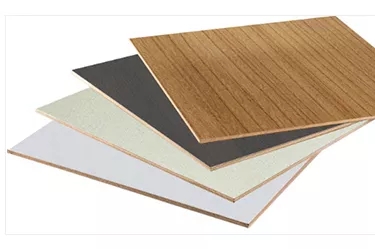
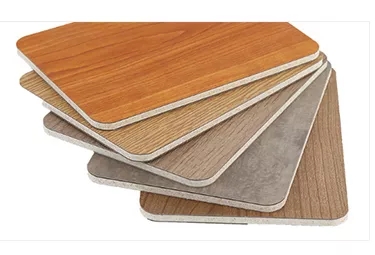
What Is Class A Fire Rating for Fire-Ice Board?
Class A, Grade A, A1, or A2 fire rating usually represents a high level of fire performance for building materials. For fire-ice boards or Class A non-combustible boards, the rating generally indicates excellent resistance to ignition, flame spread, heat release, smoke production, and flaming droplets.
Non-combustibility: The board does not easily burn or support combustion under test conditions.
Low heat release: The material releases limited heat during fire exposure, helping reduce fire spread risk.
Low smoke production: The board produces little smoke compared with ordinary combustible panels.
No flaming droplets: The material does not create burning droplets that may cause secondary fire hazards.
Building safety compliance: The board can meet stricter fire requirements for public, commercial, and high-density buildings.
Class A should not be treated as a vague marketing term. It must be supported by valid fire test reports, technical data sheets, and certification documents for the exact board type, thickness, core material, and installation system.
Class A Fire Rating Standards for Fireproof Boards
Different countries use different fire rating standards. When selecting HPL fireproof board, fire-ice board, or Class A non-combustible board, the standard must match the project market and local building code requirements.
China GB 8624: Class A, A1 and A2 Fire Rating
GB 8624 is widely used in China and many Asian markets for the burning behavior of building materials. Under this system, Class A materials are generally considered non-combustible or nearly non-combustible, with A1 and A2 grades used to describe different levels of fire performance.
Class A1: Pure non-combustible material. Inorganic fireproof boards such as fiber cement board, magnesium oxide board, and mineral boards often target this level.
Class A2: Essentially non-combustible or very limited combustible material. Some inorganic composite boards and special fire-retardant HPL systems may target this level depending on formulation and testing.
Typical test indicators may include non-combustibility, total heat release, smoke density, and flaming droplets. Buyers should request the exact GB 8624 test report for the specific fireproof board product.
Europe EN 13501-1: A1, A2-s1,d0 Fire Classification
EN 13501-1 is widely recognized in the European market for reaction-to-fire classification. For fireproof boards and fire-ice boards, A1 and A2 are the highest fire performance categories.
A1: Non-combustible classification, commonly associated with inorganic materials such as mineral board, fiber cement board, or magnesium oxide board.
A2-s1,d0: Very limited combustibility with low smoke production and no flaming droplets. Some high-grade fire-retardant boards and inorganic composite boards may target this classification.
For European projects, fire performance should be verified with the full EN 13501-1 classification, including smoke class and flaming droplet class, not only the letter grade.
USA ASTM E84: Class A Flame Spread Rating
In the United States, ASTM E84, also known as the Steiner Tunnel Test, is commonly used to evaluate flame spread and smoke development of interior building materials. Under ASTM E84, Class A usually means:
It is important to note that ASTM E84 Class A is a flame spread classification and does not always mean the material is completely non-combustible. For American projects, buyers should confirm whether the requirement is ASTM E84 Class A, non-combustible material, or a specific local code classification.
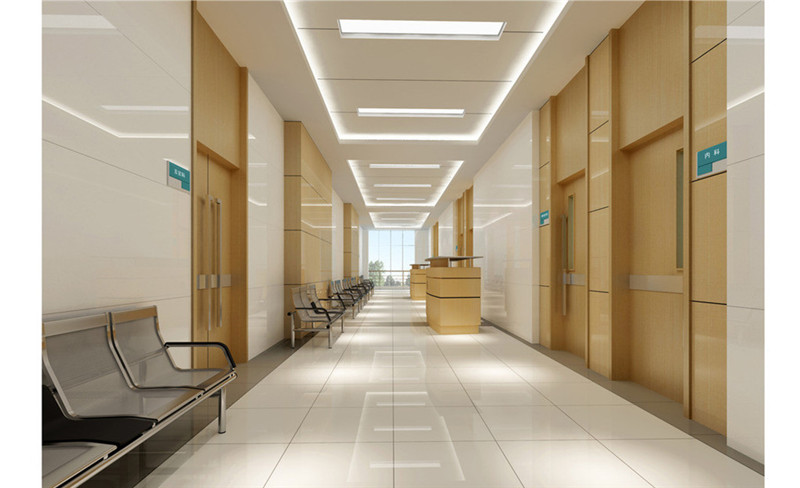
Can HPL and Compact Laminate Reach Class A Fire Rating?
HPL and compact laminate can achieve different fire ratings depending on resin formulation, core material, fire-retardant additives, thickness, and test standard. Buyers should not assume that all HPL fireproof boards are Class A.
Standard Decorative HPL
Standard decorative HPL is mainly designed for surface decoration, durability, scratch resistance, and easy cleaning. It may achieve self-extinguishing or fire-retardant performance, but it does not necessarily reach Class A, A1, or A2 fire classification.
Fire-Retardant HPL Fireproof Board
Special fire-retardant HPL fireproof boards can be engineered with flame-retardant formulas and low-flame spread properties. Some products may achieve ASTM E84 Class A or limited-combustibility classifications under specific standards, depending on the product grade and test results.
Compact Laminate and Phenolic Resin Board
Compact laminate and phenolic resin boards provide strong durability, impact resistance, and moisture resistance. Their fire rating depends on the resin system, additives, density, and testing method. For fire-sensitive applications, request verified fire test reports before specification.
Inorganic Core Fire-Ice Board
Inorganic core boards, mineral-filled boards, fiber cement boards, and magnesium oxide boards are the most common materials for Class A non-combustible fire-ice boards. These materials are often selected when the project requires A1, A2, or high non-combustible performance.
Common Materials of Class A Fire-Ice Boards
Class A non-combustible fireproof boards can be made from different materials depending on the required fire rating, application environment, strength, moisture resistance, decorative effect, and installation system.
Fiber cement fire-ice board: High strength, good dimensional stability, weather resistance, and fire resistance for indoor and outdoor wall cladding.
Magnesium oxide fireproof board: Lightweight inorganic board with strong fire resistance and moisture resistance.
Inorganic core composite board: Combines fire-resistant core materials with decorative surface performance for interior decoration.
High-density mineral-filled board: Dense structure, low heat release, and suitability for strict fire safety projects.
Special fire-retardant HPL board: Provides decorative laminate appearance with improved fire performance for commercial buildings, hospitals, schools, and public interiors.
Class A Fireproof Board Comparison Table
| Board Type | Typical Fire Rating Potential | Key Advantages | Common Applications |
| Fiber Cement Board | A1 or A2, depending on product and test standard. | Non-combustible, strong, weather-resistant, stable. | Exterior wall cladding, ceilings, partitions, public buildings. |
| Magnesium Oxide Board | Often targets A1 or A2 fire performance. | Lightweight, fire-resistant, moisture-resistant, inorganic. | Interior walls, ceilings, fire-rated partitions, renovation projects. |
| Inorganic Composite Board | A1 or A2 depending on structure. | Balances fire safety, strength, and decorative performance. | Commercial interiors, hospitals, schools, transportation hubs. |
| Fire-Retardant HPL | May achieve ASTM E84 Class A or other ratings depending on grade. | Decorative, durable, scratch-resistant, easy to clean. | Wall panels, furniture, healthcare interiors, commercial decoration. |
| Standard HPL | Usually lower than Class A unless specially formulated and tested. | Decorative surface, durability, wear resistance, design variety. | Cabinets, furniture, wall surfacing, interior panels. |
Where Class A Fireproof Boards Are Commonly Used
Class A fireproof boards and fire-ice boards are suitable for projects that require higher fire safety, low smoke generation, and stable performance under fire exposure. They are especially important in public and high-occupancy buildings.
Interior wall cladding for commercial buildings
Hospital corridors, wards, and healthcare wall panels
School buildings, classrooms, and public education facilities
Hotels, apartments, and high-density residential buildings
Transportation hubs, stations, airports, and public terminals
Ceiling panels, partition systems, and fire-rated wall assemblies
Exterior wall cladding and facade systems where permitted by code
Laboratories, industrial facilities, and technical rooms
How to Choose the Right Class A Fireproof Board
Confirm the Required Fire Standard
The first step is to confirm whether the project requires GB 8624, EN 13501-1, ASTM E84, or another local fire standard. The same term “Class A” may have different meanings in different countries.
Check the Exact Fire Grade
Confirm whether the project requires A1, A2, A2-s1,d0, ASTM E84 Class A, or another rating. Do not rely only on product names such as fireproof board, fire-ice board, or non-combustible board.
Match the Board Type to the Application
Exterior wall cladding, interior decoration, ceilings, wall partitions, furniture panels, and healthcare interiors may require different board materials and installation systems. Choose the fireproof board according to application, thickness, structure, and environmental exposure.
Request Third-Party Test Reports
Reliable fireproof board suppliers should provide third-party test reports, technical data sheets, product specifications, and installation guidance. The report should match the exact product model, thickness, and intended use.
Check Smoke and Flaming Droplet Performance
For EN 13501-1 and similar standards, smoke production and flaming droplet classification are important. A2-s1,d0, for example, indicates limited combustibility, low smoke production, and no flaming droplets under test conditions.
Common Misunderstandings About Class A Fireproof Board
Misunderstanding 1: All Fireproof Boards Are Class A
Not all fireproof boards are Class A. Some products are only fire-retardant, self-extinguishing, or suitable for lower fire performance levels. Always verify the actual test report.
Misunderstanding 2: ASTM Class A Means Completely Non-Combustible
ASTM E84 Class A is based on flame spread and smoke developed indexes. It does not automatically mean the board is fully non-combustible like an A1 inorganic board. Project specifications should use the correct terminology.
Misunderstanding 3: Product Name Is Enough Proof
Names such as fireproof board, fire-rated board, non-combustible board, or fire-ice board are not enough. Only valid testing and certification documents can prove the fire rating.
Conclusion: Class A Fire Rating Does Exist for Fireproof Board
Class A fire rating is available for certain fireproof boards, especially Class A non-combustible boards, inorganic boards, fire-ice boards, and specially engineered fire-retardant board systems. However, the meaning of Class A varies by standard, including GB 8624, EN 13501-1, and ASTM E84.
For HPL, compact laminate, phenolic resin boards, and decorative fireproof boards, the actual fire rating depends on material formula, core structure, thickness, production process, and third-party testing. Standard decorative HPL should not be assumed to be Class A unless certified.
When specifying fire-ice board or Class A fireproof board, confirm the fire standard, exact grade, product type, application scenario, installation system, and test report. This helps ensure that the selected board meets project safety requirements and long-term performance expectations.
For more fireproof board and HPL product knowledge, visit www.polybett.com.
FAQ About Class A Fireproof Board and Fire-Ice Board
Is there a Class A fire rating for fireproof board?
Yes. Certain fireproof boards can achieve Class A fire rating, depending on the standard, material composition, and test results. Inorganic fireproof boards, fiber cement boards, magnesium oxide boards, and some special fire-retardant boards can meet Class A, A1, or A2 requirements.
What is a fire-ice board?
Fire-ice board is an industry term often used for Class A non-combustible fireproof board. It usually refers to boards with excellent fire resistance, low heat release, low smoke, and stable performance under high-temperature conditions.
Is Class A the same as A1 or A2 fire rating?
Not always. Class A may refer to different standards depending on the region. GB 8624 and EN 13501-1 use A1 and A2 classifications, while ASTM E84 uses Class A based on flame spread and smoke development. Always confirm the exact test standard.
Can HPL fireproof board reach Class A rating?
Some specially engineered fire-retardant HPL boards may achieve ASTM E84 Class A or other high fire classifications, but standard decorative HPL usually does not automatically reach Class A. Always request the fire test report for the exact HPL product.
What is ASTM E84 Class A?
ASTM E84 Class A is a fire performance classification based on flame spread and smoke development. A Class A result typically requires a Flame Spread Index of 25 or less and a Smoke Developed Index of 450 or less.
What does EN 13501 A2-s1,d0 mean?
EN 13501 A2-s1,d0 means the material has very limited combustibility, low smoke production, and no flaming droplets under the test classification. It is often required for fire-sensitive building materials in European projects.
What materials are commonly used for Class A non-combustible boards?
Common Class A non-combustible board materials include fiber cement, magnesium oxide, mineral-filled core boards, inorganic composite boards, calcium silicate boards, and other inorganic fire-resistant materials.
How do I verify whether a fireproof board is Class A?
Ask for third-party fire test reports, technical data sheets, product specifications, and certification documents. The report should clearly show the test standard, fire grade, product model, thickness, and tested application system.
Where are Class A fireproof boards used?
Class A fireproof boards are used in hospitals, schools, commercial buildings, hotels, transportation hubs, public facilities, interior wall cladding, ceiling systems, partitions, facade systems, and other projects requiring strong fire safety performance.
What should buyers check before purchasing fire-ice board?
Buyers should check the fire standard, exact grade, material composition, thickness, application area, installation system, test report validity, supplier experience, and whether the product meets local building code requirements.
 Русский
 English
 العربية
 Français
 Español
 Português
 Deutsch
 italiano
 日本語
日本語 한국어
한국어 Nederlands
 Tiếng Việt
 ไทย
ไทย Polski
 Türkçe
 አማርኛ
አማርኛ Bahasa Melayu
 தமிழ்
தமிழ் Filipino
 Bahasa Indonesia
 magyar
 Română
 Монгол
 қазақ
қазақ Српски
 हिन्दी
 فارسی
فارسی Kiswahili
 Slovenčina
 Slovenščina
 Svenska
 українська
 Ελληνικά
 Suomi
Suomi Հայերեն
 עברית
עברית اردو
اردو Shqip
Shqip বাংলা
বাংলা Hrvatski
 Afrikaans
 Māori
Māori සිංහල
සිංහල Oʻzbekcha
 latviešu
 Беларуская мова
 Bosanski
 Български
 ქართული
 Lietuvių
 Malti
Malti Runasimi