In cleanroom design, every component directly influences environmental control and operational reliability—and the ceiling is one of the most critical elements. High-Pressure Laminate (HPL) ceilings have become a preferred solution for modern cleanrooms, offering an ideal balance of hygiene, durability, safety, and design flexibility.
This article explains why HPL ceilings are indispensable in cleanroom environments, outlining their core advantages, application scenarios, and key considerations for selection and installation.
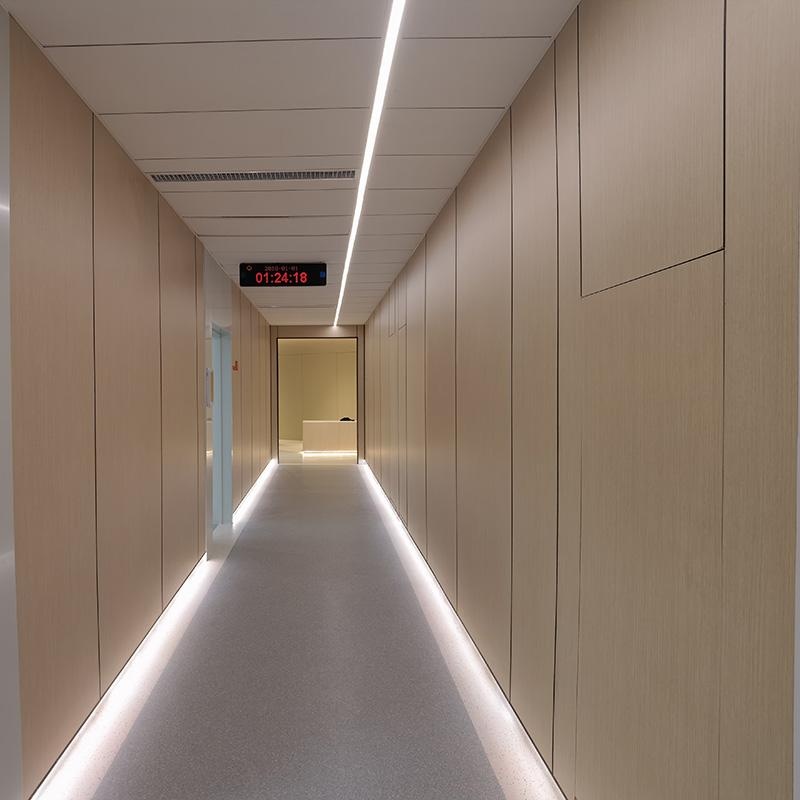
Why HPL Ceilings Are Ideal for Cleanroom Environments
Cleanrooms demand materials capable of withstanding stringent hygiene protocols, chemical exposure, and frequent cleaning. HPL ceilings are engineered precisely for these challenges.
Manufactured by bonding high-pressure decorative laminates to stable core materials—such as aluminum honeycomb, magnesium oxide (MgO), or PU foam—under approximately 150°C high temperature and high pressure, HPL ceiling panels achieve exceptional structural stability and surface performance.
Seamless, Hygienic Surface
One of the most significant advantages of HPL ceilings is their non-porous, seamless surface. This structure prevents:
As a result, HPL ceilings are ideal for pharmaceutical laboratories, electronics cleanrooms, and medical facilities where strict contamination control is mandatory. Unlike gypsum board or wood-based materials, HPL surfaces are easy to disinfect and support compliance with high cleanroom classification standards.
Durability Under Harsh Cleanroom Conditions
HPL ceilings are designed to perform consistently under demanding operational conditions. They offer excellent resistance to:
These properties ensure dimensional stability without warping, swelling, or fading, even in high-humidity or chemically aggressive environments. With a typical service life of 10–15 years, HPL ceilings significantly reduce replacement frequency, maintenance costs, and operational downtime.
Fire Safety and Utility Integration
Fire Resistance
Safety is non-negotiable in cleanroom facilities. HPL ceilings commonly achieve A1 fire ratings, meeting international fire safety standards. In the event of a fire, they help slow flame spread and reduce overall risk, enhancing facility safety and regulatory compliance.
Modular Integration of Cleanroom Systems
HPL ceiling systems are modular by design, allowing seamless integration with:
All utilities remain concealed while maintaining optimal airflow control and easy maintenance access.
Consistent Design with HPL Walls and Partitions
For maximum performance and visual consistency, HPL ceilings are frequently used alongside HPL cleanroom walls and partitions. This integrated approach ensures:
Modern HPL technology offers thousands of UV-stable finishes, including wood grain, stone, metal, and abstract textures—allowing customization without compromising cleanroom performance.
Key Features of HPL Ceilings for Cleanrooms
Extreme Durability & Stability
High-pressure manufacturing creates impact- and wear-resistant panels with a 20–25 year lifespan.
Superior Fire & Moisture Resistance
A1 fire-rated, non-porous surfaces prevent moisture penetration, mold growth, and deformation.
Design Versatility
Wide selection of finishes with excellent UV stability supports functional and aesthetic requirements.
Low Maintenance
Stain-resistant surfaces require no painting or polishing—routine cleaning with water or mild agents is sufficient.
Efficient Utility Integration
Modular systems simplify installation of HVAC, filtration, and lighting while preserving cleanroom integrity.
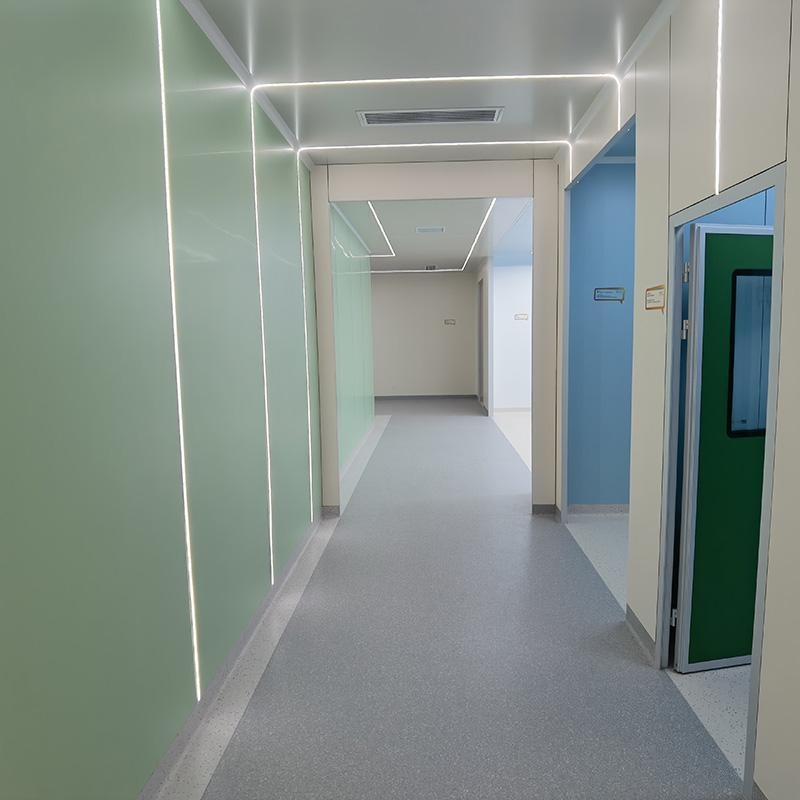
Main Application Scenarios for HPL Ceilings
Clean and Medical Environments
Pharmaceutical cleanrooms
Laboratories and R&D facilities
Medical centers and operating rooms
HPL ceilings support sterile conditions through antibacterial properties and easy disinfection.
High-Traffic Public Buildings
Their impact resistance and long-term aesthetic stability make them ideal for demanding public spaces.
High-Humidity Areas
HPL ceilings outperform traditional PVC or aluminum panels in moisture resistance and visual quality.
Installation Systems and Purchasing Guidelines
Installation Options
Exposed Fastening Systems
Visible fasteners allow quick access and maintenance—ideal for industrial cleanrooms prioritizing efficiency.
Concealed Fastening Systems
Seamless appearance minimizes particle generation and supports high-end cleanroom aesthetics.
Purchasing Recommendations
To ensure performance and regulatory compliance, source HPL ceilings from manufacturers with proven cleanroom expertise, such as Polybett , Wilsonart, Formica, and Trespa International. Reputable suppliers comply with international standards like ISO 9001 and ROHS, ensuring consistent quality and reliability.
In the 2025 market, standard HPL panels (1.2 m × 2.4 m) typically range from USD 15–27 per square meter (approximately 1,200–1,800 RMB per sheet). While the initial cost is higher than PVC or gypsum board, the long lifespan, low maintenance requirements, and cleanroom compliance provide superior long-term value.
Conclusion
HPL ceilings represent a high-performance solution for cleanroom environments, delivering outstanding hygiene control, durability, fire safety, and design flexibility. When combined with HPL walls and partitions, they create a fully integrated cleanroom system that meets the highest standards required for pharmaceutical production, scientific research, and medical applications.
By selecting certified manufacturers and appropriate installation systems, HPL ceilings become a strategic, long-term investment—ensuring cleanroom performance, safety, and operational efficiency for decades to come.
 Русский
 English
 العربية
 Français
 Español
 Português
 Deutsch
 italiano
 日本語
日本語 한국어
한국어 Nederlands
 Tiếng Việt
 ไทย
ไทย Polski
 Türkçe
 አማርኛ
አማርኛ Bahasa Melayu
 தமிழ்
தமிழ் Filipino
 Bahasa Indonesia
 magyar
 Română
 Монгол
 қазақ
қазақ Српски
 हिन्दी
 فارسی
فارسی Kiswahili
 Slovenčina
 Slovenščina
 Svenska
 українська
 Ελληνικά
 Suomi
Suomi Հայերեն
 עברית
עברית اردو
اردو Shqip
Shqip বাংলা
বাংলা Hrvatski
 Afrikaans
 Māori
Māori සිංහල
සිංහල Oʻzbekcha
 latviešu
 Беларуская мова
 Bosanski
 Български
 ქართული
 Lietuvių
 Malti
Malti Runasimi