Understanding the relationship between HPL thickness and performance is not just a technical detail—it is a decisive factor that directly impacts durability, cost efficiency, and long-term satisfaction in real-world applications. In modern construction and interior design, selecting the correct High-Pressure Laminate (HPL) thickness determines whether a project performs flawlessly over time or develops avoidable issues such as warping, cracking, or premature wear.
We approach this topic from a practical, experience-based perspective, focusing on how thickness behaves under real conditions rather than just theoretical specifications.
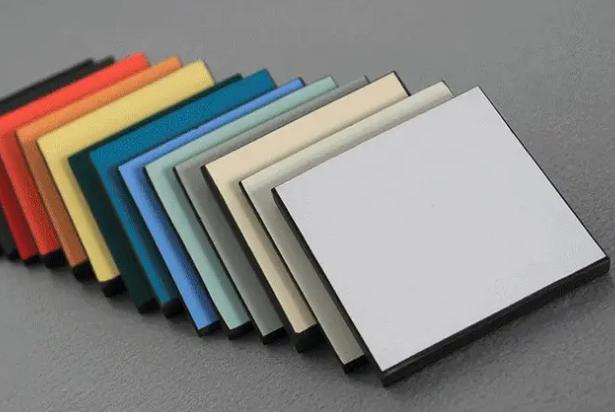
Why HPL Thickness Matters More Than You Think
At first glance, thickness may seem like a simple number. In reality, it defines the core structural behavior of the material.
HPL sheets typically range from 0.6mm to 25mm, and each category serves a specific purpose:
Thin sheets (≤2mm): Surface applications
Medium thickness (2–6mm): Balanced performance
Thick boards (6mm+): Structural and high-impact environments
Choosing incorrectly can lead to hidden long-term costs, including maintenance, replacement, and installation inefficiencies.
Thin HPL Panels (0.6mm–2mm): Lightweight Efficiency
Thin HPL sheets are designed primarily for decorative and surface-level applications. Their advantages lie in:
Best Use Cases
Furniture surfaces
Cabinet facings
Wall cladding overlays
Decorative panels
However, these sheets lack structural strength. When used beyond their intended purpose, they can result in:
Key Insight: Thin HPL is not weak—it is simply purpose-specific.
Medium Thickness HPL (2mm–6mm): The Versatile Standard
This range represents the most commonly used thickness in commercial projects. It provides a balance between strength, flexibility, and cost efficiency.
Performance Benefits
Improved impact resistance
Better dimensional stability
Suitable for moderate load-bearing applications
Typical Applications
Office partitions
Public restroom cubicles
Commercial furniture
Interior wall systems
In practice, 2mm, 3mm, and 5mm boards dominate this category due to their adaptability.
Real-World Advantage: These thicknesses deliver reliable performance without overengineering, making them ideal for projects with budget constraints and moderate usage demands.
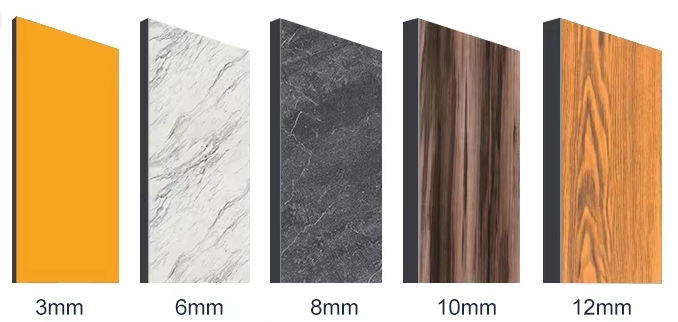
Thick HPL Panels (6mm+): Built for Demanding Environments
Once thickness exceeds 6mm, HPL transitions from a surface material to a self-supporting structural solution.
Key Performance Enhancements
Superior impact resistance
Excellent load-bearing capacity
Increased longevity under stress
Enhanced fire and moisture resistance
High-Demand Applications
In these environments, materials are subjected to continuous use, frequent cleaning, and environmental stress. Thicker HPL ensures consistent performance over time.
Durability Over Time: Where Thickness Proves Its Value
The most significant difference between thickness levels becomes evident after years of use.
How Thicker HPL Performs Better Long-Term
Maintains structural integrity under repeated stress
Resists humidity-induced deformation
Withstands cleaning chemicals and abrasion
Retains surface finish and flatness
Thinner panels may perform adequately at first but often show gradual deterioration in demanding conditions.
Critical Insight: Thickness directly influences aging performance, not just initial strength.
Environmental Conditions Should Drive Your Decision
One of the most common mistakes is choosing thickness based purely on budget considerations. In reality, environmental conditions are the dominant factor.
High Humidity or Wet Areas
Dry, Low-Traffic Spaces
High-Traffic Zones
Strategic Approach: Instead of asking “What is cheaper?”, ask “What will still perform after years of use?”
Cost vs Performance: Finding the Right Balance
While thicker HPL offers better performance, it also introduces:
The Hidden Cost of Over-Specification
Overusing thick panels in low-demand environments leads to:
The Risk of Under-Specification
Choosing panels that are too thin results in:
Premature failure
Higher maintenance costs
Replacement expenses
Optimal Strategy: Match thickness precisely to functional requirements, not assumptions.
Quality vs Thickness: A Critical Distinction
Thickness alone does not guarantee performance. A high-quality thinner panel can outperform a low-quality thicker one.
Key Quality Indicators
Smooth, consistent surface finish
No visible bubbles or defects
High-density core structure
Uniform coloration and pressing
Professional Insight: Always prioritize material quality and supplier reliability over simply increasing thickness.
Installation: The Overlooked Factor That Defines Performance
Even the correct thickness can fail if installation is poorly executed.
Common Installation Issues
Uneven mounting leading to warping
Improper fastening causing loosening
Lack of expansion gaps
Poor sealing in wet areas
Best Practices
Ensure precise alignment
Use appropriate fixing systems
Allow for thermal expansion
Apply proper sealing techniques
Key Point: Installation quality is just as important as material selection.
Specialized Applications Require Specialized Choices
Certain environments demand more than standard thickness considerations.
Healthcare and Laboratories
Wet Areas (Bathrooms, Kitchens)
High-Hygiene Zones
In these cases, thickness is part of a broader performance strategy, not an isolated decision.
Future Trends in HPL Thickness and Technology
The evolution of HPL is shifting toward performance-driven innovation:
Eco-friendly production methods
Antibacterial and anti-fingerprint surfaces
Improved fire-retardant formulations
Customization in thickness and design
Modern HPL is no longer just about durability—it is about combining performance, sustainability, and design flexibility.
Final Thoughts: Choosing the Right Thickness with Confidence
Selecting the correct HPL thickness is not about choosing the thickest option available. It is about achieving the perfect balance between performance, cost, and application needs.
We recommend focusing on:
When these factors align, the result is a solution that delivers long-term durability, cost efficiency, and consistent performance.
The right thickness is not the biggest—it is the one that works best over time.
 Русский
 English
 العربية
 Français
 Español
 Português
 Deutsch
 italiano
 日本語
日本語 한국어
한국어 Nederlands
 Tiếng Việt
 ไทย
ไทย Polski
 Türkçe
 አማርኛ
አማርኛ Bahasa Melayu
 தமிழ்
தமிழ் Filipino
 Bahasa Indonesia
 magyar
 Română
 Монгол
 қазақ
қазақ Српски
 हिन्दी
 فارسی
فارسی Kiswahili
 Slovenčina
 Slovenščina
 Svenska
 українська
 Ελληνικά
 Suomi
Suomi Հայերեն
 עברית
עברית اردو
اردو Shqip
Shqip বাংলা
বাংলা Hrvatski
 Afrikaans
 Māori
Māori සිංහල
සිංහල Oʻzbekcha
 latviešu
 Беларуская мова
 Bosanski
 Български
 ქართული
 Lietuvių
 Malti
Malti Runasimi