Choosing the right surface material is one of the most critical decisions in architectural design, interior decoration, and commercial construction. Among today’s most widely used materials, resin panels and compact laminate panels stand out for their durability, aesthetics, and performance versatility. However, while these materials may appear similar at first glance, they differ significantly in composition, structural strength, fire resistance, environmental performance, cost, and application suitability.
In this comprehensive guide, we present a detailed, professional comparison of resin panels vs. compact laminate panels, helping designers, contractors, and property owners select the best solution for residential, commercial, and industrial environments.
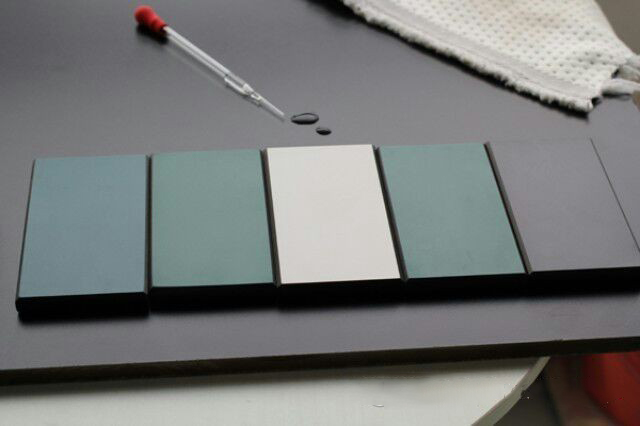
What Are Resin Panels?
Resin panels, often referred to as artificial stone panels or solid surface resin boards, are composite materials made primarily from synthetic resins such as epoxy resin, unsaturated polyester resin, or acrylic resin. These resins are blended with mineral fillers like calcium carbonate or aluminum hydroxide, then cast, cured, and polished into rigid decorative boards.
Key Characteristics of Resin Panels
Smooth, seamless appearance
Can be translucent or semi-transparent
Easily molded into complex shapes
Warm tactile feel
Suitable for custom fabrication
Resin panels are prized for their high aesthetic value, allowing designers to create surfaces that mimic marble, onyx, terrazzo, or artistic stone effects while maintaining consistent color and texture throughout the slab.
What Are Compact Laminate Panels?
Compact laminate panels, also known as HPL compact boards or solid phenolic panels, are manufactured by pressing multiple layers of kraft paper impregnated with phenolic resin, topped with a decorative layer impregnated with melamine resin. These layers are bonded under extreme heat (approximately 150°C) and high pressure (around 1430 psi) to create an ultra-dense, non-porous structural panel.
Key Characteristics of Compact Laminate Panels
Extremely high density and rigidity
Excellent fire resistance
Outstanding water and moisture resistance
Exceptional impact and abrasion resistance
Long service life even in harsh environments
Compact laminate panels are widely recognized as one of the strongest architectural surface materials, suitable for both interior and exterior use.
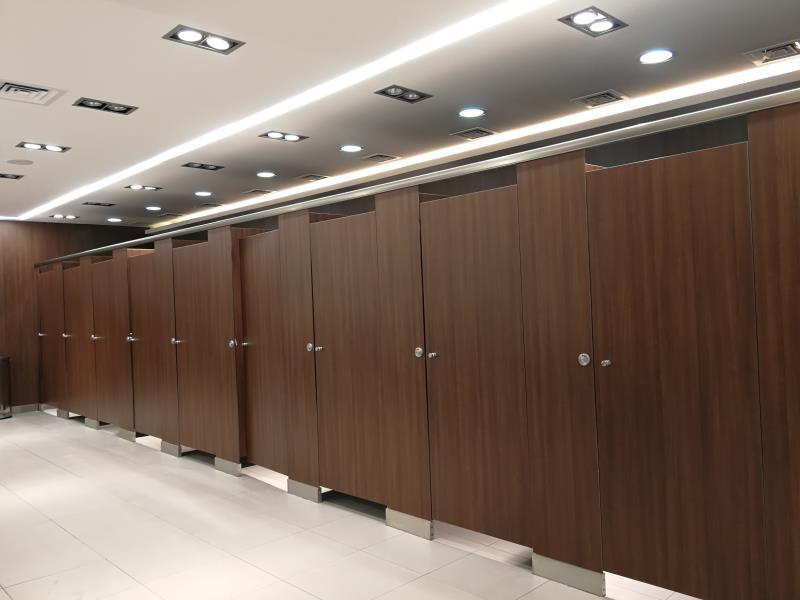
Resin Panels vs. Compact Laminate Panels: Core Differences
Let’s examine how these two materials compare across the most important performance and design factors.
1. Material Composition
Resin Panels
Resin panels consist of:
Synthetic resin base (epoxy, acrylic, polyester)
Mineral fillers (calcium powder, aluminum hydroxide)
Pigments and decorative inclusions
This structure creates a homogeneous, stone-like surface that can be cut, thermoformed, and seamlessly jointed.
Compact Laminate Panels
Compact laminate panels consist of:
Multiple layers of kraft paper
Phenolic resin impregnation
Decorative melamine surface layer
High-pressure compression
This layered structure results in a solid, load-bearing panel with exceptional mechanical strength.
Bottom line: Resin panels are cast composites, while compact laminates are high-pressure laminated structural boards.
2. Physical Properties and Structural Performance
Resin Panels
Moderate to high hardness
Smooth and non-porous surface
Good sound insulation
Flexible design shaping capabilities
Slightly lower impact resistance compared to compact laminate
Compact Laminate Panels
Extremely high density
Outstanding impact resistance
High bending strength and rigidity
Suitable for self-supporting structures
Resistant to warping, cracking, and deformation
Conclusion: For environments requiring maximum load-bearing strength, compact laminate panels significantly outperform resin panels.
3. Fire Resistance Performance
Resin Panels
Generally combustible
May soften, melt, or emit harmful gases under high temperatures
Not suitable for high fire-risk environments without fire-retardant additives
Compact Laminate Panels
Naturally flame-retardant
Self-extinguishing when exposed to fire
Do not drip molten material
Emit very low smoke and toxic gases
Result: Compact laminate panels offer superior fire safety performance, making them ideal for public buildings, laboratories, hospitals, and high-occupancy environments.
4. Moisture and Water Resistance
Resin Panels
Excellent water resistance
Non-porous surface prevents moisture penetration
Suitable for wet areas such as bathrooms and kitchens
Compact Laminate Panels
100% waterproof through the entire thickness
Do not swell, delaminate, or deform in humid environments
Suitable for direct water exposure and outdoor use
Verdict: Both perform well in moisture-rich spaces, but compact laminate provides superior long-term dimensional stability in extreme humidity.
5. Chemical and Corrosion Resistance
Resin Panels
Good resistance to mild acids and cleaning agents
Vulnerable to strong alkaline substances and solvents
Prolonged chemical exposure may cause surface dulling
Compact Laminate Panels
Outstanding resistance to acids, alkalis, solvents, and disinfectants
Available in chemical-resistant grades for laboratories
Maintains structural integrity in harsh industrial conditions
Conclusion: For chemically aggressive environments, compact laminate panels dominate.
6. Durability and Lifespan
Resin Panels
Compact Laminate Panels
Extremely scratch-resistant
Superior abrasion and impact resistance
Typical lifespan: 15–30 years or more, even in demanding applications
Result: Compact laminate panels deliver longer service life and lower replacement costs over time.
7. Aesthetic Performance and Design Flexibility
Resin Panels
Can be translucent or backlit
Seamless joints
Easily thermoformed into curved or sculptural designs
Ideal for artistic and luxury interiors
Compact Laminate Panels
Available in thousands of colors, wood grains, stone patterns, and textures
Matte, gloss, anti-fingerprint, and textured finishes
More rigid, less suitable for complex shaping
Summary: Resin panels excel in high-end decorative aesthetics, while compact laminate excels in functional architectural uniformity.
8. Weight and Installation
Resin Panels
Compact Laminate Panels
Conclusion: Resin panels offer greater installation flexibility, while compact laminate panels require more robust handling but provide higher structural reliability.
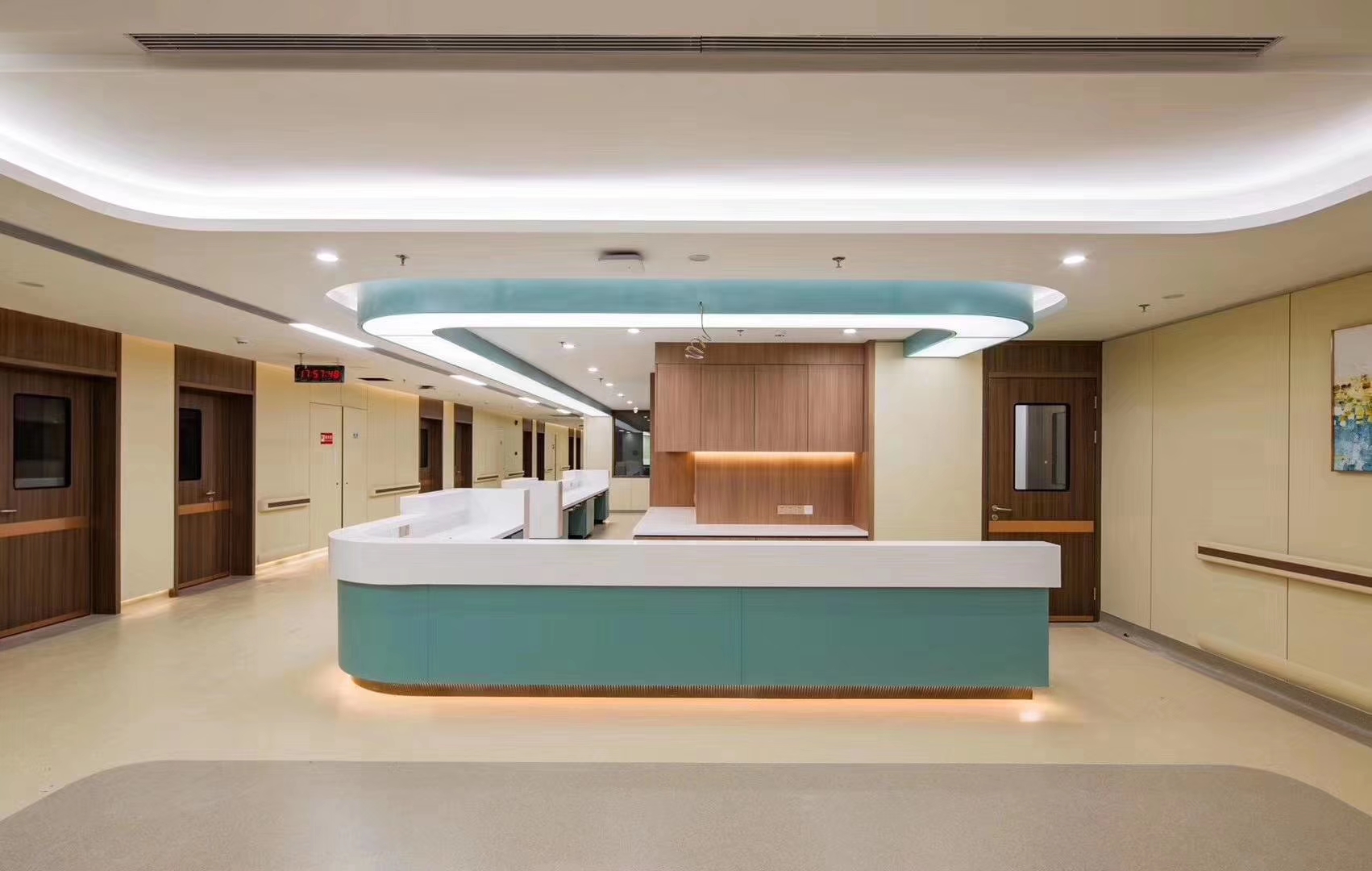
Applications: Where Each Material Performs Best
Best Applications for Resin Panels
Resin panels excel where visual impact, seamless aesthetics, and custom shaping are priorities.
Best Applications for Compact Laminate Panels
Compact laminate panels are ideal for high-traffic, high-humidity, fire-sensitive, and structurally demanding environments.
Resin Panels vs. Compact Laminate Panels: Summary Comparison Table
| Feature | Resin Panels | Compact Laminate Panels |
| Main Materials | Resin + mineral fillers | Kraft paper + phenolic/melamine resin |
| Manufacturing | Casting and curing | High-temperature, high-pressure lamination |
| Fire Resistance | Moderate | Excellent (self-extinguishing) |
| Water Resistance | High | Extremely high (100% waterproof) |
| Impact Resistance | Good | Excellent |
| Chemical Resistance | Moderate | Superior |
| Design Flexibility | Excellent (curved, translucent) | Moderate |
| Structural Strength | Medium | Very high |
| Typical Lifespan | 10–15 years | 15–30+ years |
| Best Use | Decorative interiors | High-performance environments |
Price Comparison in the 2026 Market
Material pricing fluctuates based on raw material costs, thickness, brand positioning, and functional customization. Below are typical pricing ranges:
Compact Laminate Panels
Standard grades: RMB 150–500/m²
Premium/imported brands: RMB 600–1200+/m²
Thicker panels (8mm–12mm) significantly increase cost
Resin Panels
Price Influencing Factors Comparison
| Factor | Compact Laminate | Resin Panels |
| Thickness | Strong price increase per mm | Moderate increase |
| Brand | High premium | Lower brand gap |
| Functional Upgrades | Chemical resistance, UV resistance increase cost | Translucency, 3D textures increase cost |
| Installation Complexity | Higher labor cost | Lower labor cost |
Purchasing Recommendations
Choose Compact Laminate Panels If You Need:
Maximum durability
Fire-retardant performance
Chemical resistance
Outdoor or wet-area applications
Long-term lifecycle cost efficiency
Choose Resin Panels If You Need:
Luxury aesthetics
Seamless joints
Translucent or artistic effects
Curved or sculptural surfaces
Lower initial project cost
Frequently Asked Questions
1. Which is better: resin panels or compact laminate panels?
Neither is universally better. Compact laminate panels excel in performance and durability, while resin panels dominate in aesthetics and design flexibility. The best choice depends on your application requirements.
2. Are compact laminate panels fireproof?
Compact laminate panels are flame-retardant and self-extinguishing, making them suitable for fire-sensitive environments such as hospitals, schools, and commercial buildings.
3. Can resin panels be used in bathrooms?
Yes. Resin panels have excellent moisture resistance and are commonly used in bathrooms, vanity tops, and wet-zone wall cladding.
4. Which material lasts longer?
Compact laminate panels generally have a longer service life, often exceeding 20 years in demanding environments, while resin panels typically last 10–15 years under heavy use.
Conclusion
Both resin panels and compact laminate panels offer outstanding performance, but they are designed for different functional priorities. Resin panels excel in visual impact, seamless design, and creative freedom, making them ideal for decorative interiors and luxury architectural features. Compact laminate panels, on the other hand, dominate in structural strength, fire resistance, moisture durability, and chemical stability, making them indispensable in high-traffic commercial, industrial, and public-sector environments.
By carefully evaluating design goals, environmental exposure, safety standards, maintenance expectations, and lifecycle costs, you can confidently select the material that delivers the best performance and return on investment for your project.
 Русский
 English
 العربية
 Français
 Español
 Português
 Deutsch
 italiano
 日本語
日本語 한국어
한국어 Nederlands
 Tiếng Việt
 ไทย
ไทย Polski
 Türkçe
 አማርኛ
አማርኛ Bahasa Melayu
 தமிழ்
தமிழ் Filipino
 Bahasa Indonesia
 magyar
 Română
 Монгол
 қазақ
қазақ Српски
 हिन्दी
 فارسی
فارسی Kiswahili
 Slovenčina
 Slovenščina
 Svenska
 українська
 Ελληνικά
 Suomi
Suomi Հայերեն
 עברית
עברית اردو
اردو Shqip
Shqip বাংলা
বাংলা Hrvatski
 Afrikaans
 Māori
Māori සිංහල
සිංහල Oʻzbekcha
 latviešu
 Беларуская мова
 Bosanski
 Български
 ქართული
 Lietuvių
 Malti
Malti Runasimi