What Are HPL Outdoor Wall Panels?
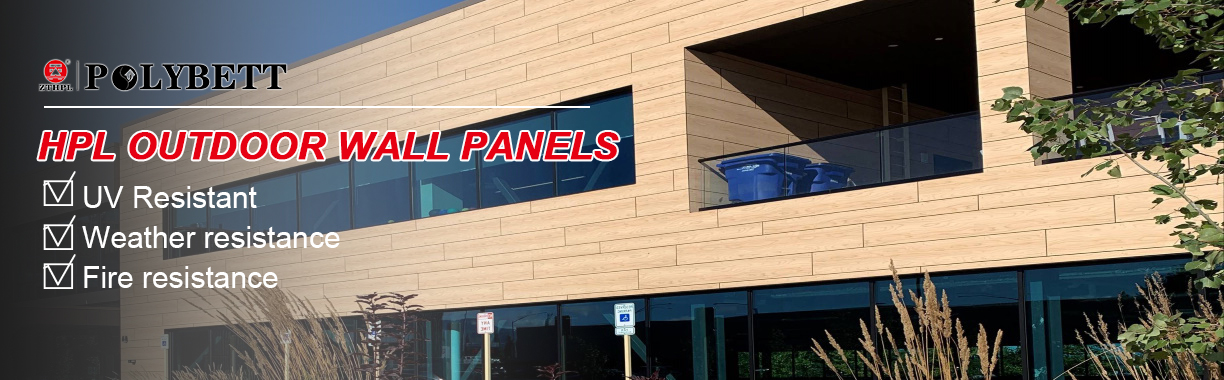
HPL outdoor wall panels are high-pressure compact laminate panels engineered specifically for exterior walls, ventilated façades, rainscreen cladding, balconies, soffits and other weather-exposed architectural applications.
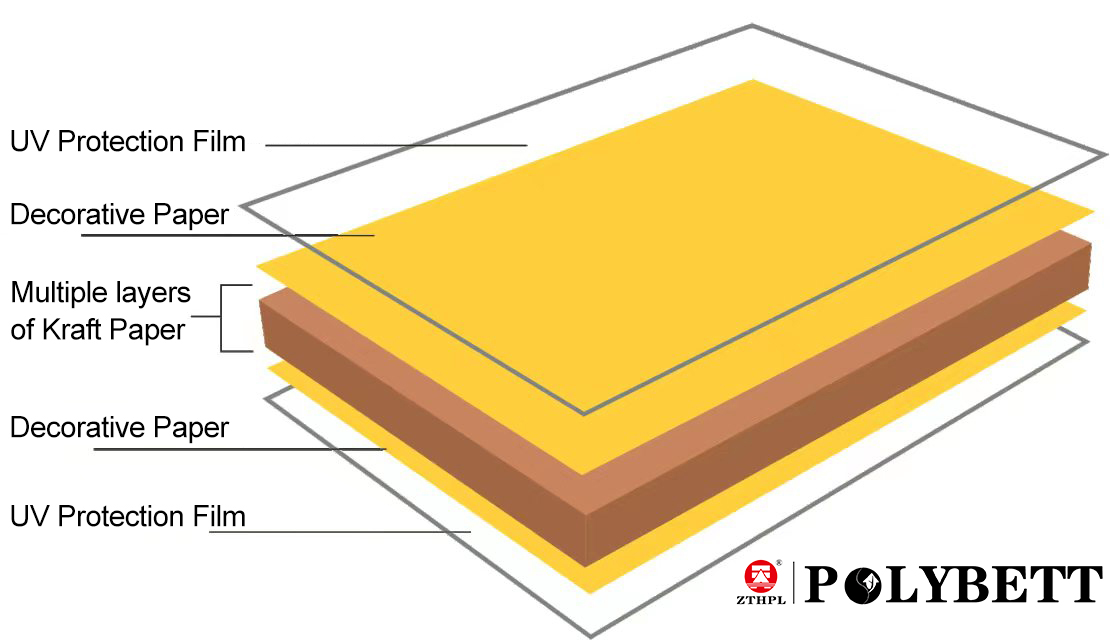
They are manufactured by pressing multiple layers of resin-impregnated kraft paper together with decorative and protective surface layers under high temperature and pressure. The result is a dense, rigid panel that combines weather resistance, impact strength and architectural design flexibility.
Quick answer: Exterior-grade HPL panels are durable, UV-resistant and relatively low-maintenance façade materials. Their suitability depends on the exact exterior grade, fire classification, panel thickness, fixing system, substructure and local building regulations.
How Are Exterior HPL Panels Made?
The core of an exterior compact HPL panel consists of multiple kraft paper layers impregnated with thermosetting phenolic resin. Decorative papers and exterior-grade protective surface layers are applied to one or both sides.
The assembled layers are consolidated under high pressure and temperature. During curing, the resin system cross-links and creates a dense, homogeneous panel with strong mechanical and dimensional properties.
Exterior HPL differs from ordinary interior laminate because its surface technology and resin formulation are designed for prolonged exposure to sunlight, rain and changing temperatures. Interior-grade HPL should not be substituted for a certified exterior product, even if the two panels appear similar.
What Are the Key Features of HPL Outdoor Wall Panels?
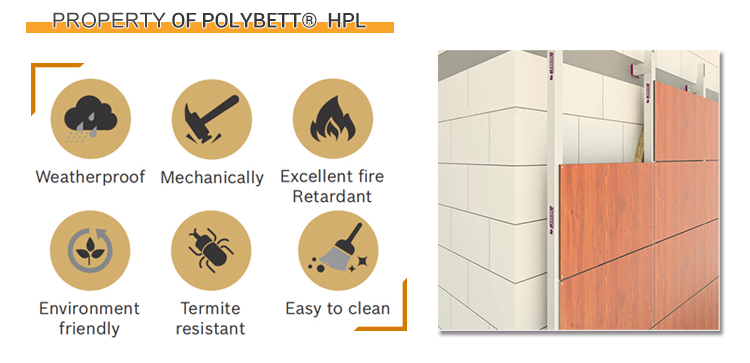
1. Exterior Weather Resistance
Properly specified exterior HPL panels are designed to withstand rain, humidity, seasonal temperature changes and repeated wet-dry cycles. Their dense construction helps resist swelling, rot and delamination when the panels are fabricated and installed according to the manufacturer’s instructions.
Weather resistance should still be verified through the supplier’s technical data and applicable exterior-grade testing. A generic claim that a panel is “waterproof” does not prove that the complete façade system is watertight.
2. UV Resistance and Color Stability
Exterior-grade surfaces are engineered to limit fading and deterioration caused by ultraviolet radiation. This is especially important for dark colors, south- or west-facing walls and projects in regions with intense sunlight.
Ask the supplier for accelerated weathering results, Grey Scale ratings or other documented evidence of color stability. Warranty terms may differ according to color, climate, orientation and application.
3. Impact, Scratch and Abrasion Resistance
The high-density core gives compact HPL strong resistance to everyday impact and surface wear. This makes it useful around entrances, schools, transport facilities, commercial buildings and other areas where lower façade sections may experience frequent contact.
No architectural panel is damage-proof. Required thickness and support spacing should be selected according to panel size, impact risk, wind load and fixing design.
4. Moisture and Humidity Resistance
Compact HPL does not rely on an MDF or particleboard substrate, making it more suitable for exterior moisture exposure than conventional thin laminate bonded to a wood-based board.
The façade must nevertheless include correct joints, flashings, drainage routes and a suitable weather barrier. The panel is one part of the building envelope, not a replacement for the wall’s water-management system.
5. Wide Choice of Colors and Finishes
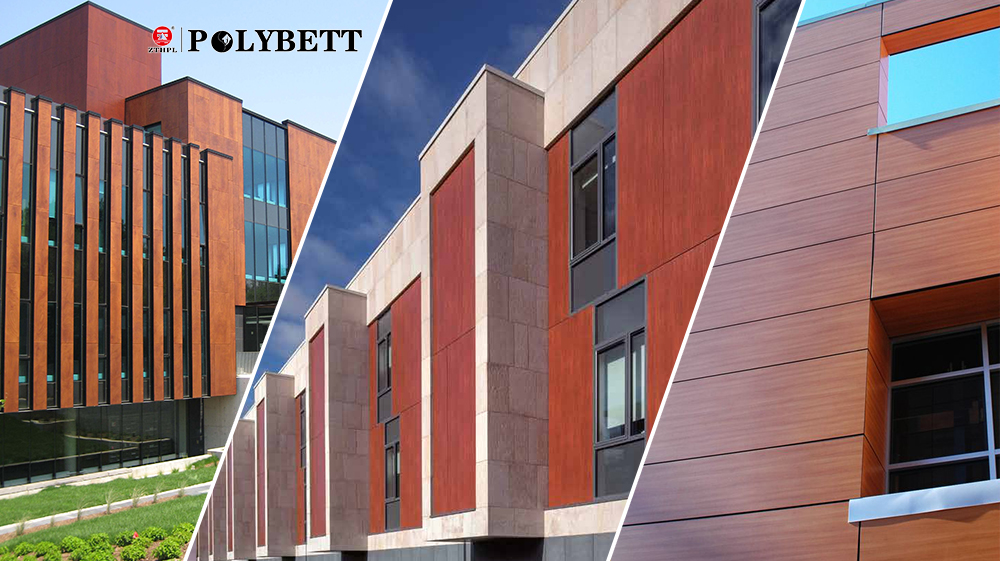
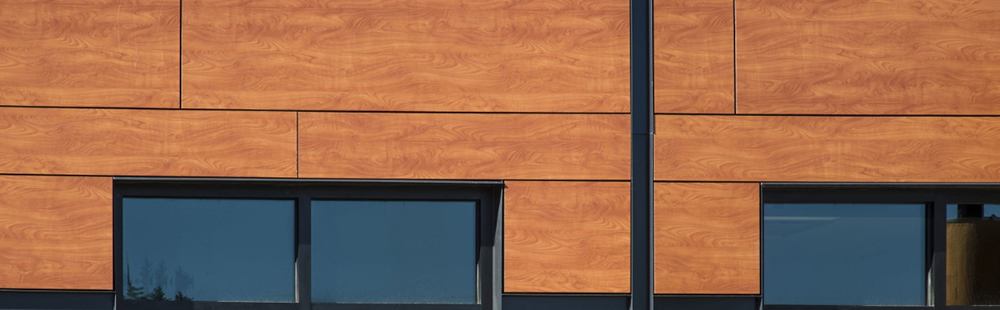
Exterior HPL is available in solid colors, woodgrains, stone-inspired patterns, metallic effects and textured finishes. Architects can create natural-looking façades without the refinishing requirements commonly associated with real wood.
For large projects, approve physical samples from the proposed production range. Digital images cannot reliably show color, gloss, texture or how a finish will appear under natural light.
6. Machinability and Customization
HPL panels can be cut, drilled and CNC-machined into project-specific sizes and shapes. Suppliers may also prepare fixing holes, slots and routed details from approved CAD or PDF drawings.
Factory machining can reduce onsite waste and installation time, but drawings must correctly address tolerances, joint widths, fixed points, sliding points, edge distances and thermal movement.
7. Low Routine Maintenance
The closed decorative surface is generally easy to clean and does not normally require painting or staining. This can reduce lifecycle maintenance compared with materials that need periodic recoating.
Lifecycle cost depends on access, cleaning frequency, replacement availability and installation quality. Buyers should compare total installed and maintenance costs rather than panel prices alone.
8. Design Flexibility for Ventilated Façades
HPL outdoor wall panels are frequently installed as part of a rear-ventilated rainscreen. The panels form the outer protective layer, while an engineered cavity behind them allows drainage and ventilation.
The cavity may help manage heat and moisture, but bare HPL is not a high-performance insulation material. Any thermal improvement comes primarily from the complete wall assembly, including insulation, cavity and air barrier.
Typical Exterior HPL Panel Specifications
Available specifications vary by manufacturer. The following table shows the items buyers should confirm rather than universal guaranteed values.
| Specification | Common Options | Procurement Consideration |
| Panel type | Exterior compact HPL | Do not substitute interior compact laminate |
| Thickness | Often 6, 8, 10 or 12 mm | Select by panel size, wind load and fixing span |
| Sheet size | Standard and large-format sheets | Optimize cutting plans and joint layout |
| Surface | Matte, textured, woodgrain, stone, solid or metallic | Confirm exterior suitability for the selected decor |
| Core color | Usually dark brown or black | Visible edges affect the final appearance |
| Fire classification | Standard or fire-retardant grades | Verify the complete classification and installation scope |
| Fixing system | Rivets, screws, concealed anchors or approved adhesive systems | Use an engineered, tested and compatible system |
These values are indicative only. Final specifications must come from the chosen manufacturer’s current technical data, structural calculations and project requirements.
Which Standards and Test Reports Should Buyers Check?
EN 438 Exterior-Grade Classification
EN 438 is an important European reference for high-pressure decorative laminates. Exterior compact laminates are covered by the relevant exterior-grade parts and classifications of this standard.
Ask the supplier to identify the exact EN 438 classification on the technical data sheet. Confirm whether the product is standard or flame-retardant and whether the declared performance applies to the selected thickness and finish.
Weathering and UV Testing
Request accelerated weathering, color stability and surface appearance data relevant to exterior HPL. Pay particular attention to the selected color because different pigments and finishes may produce different results.
Mechanical Performance
Relevant technical data may include flexural strength, modulus of elasticity, impact resistance, dimensional stability and fixing pull-out performance. These values help the façade engineer determine panel thickness and support spacing.
Environmental Documentation
Environmental claims should be supported by documents such as an Environmental Product Declaration, chain-of-custody certification, VOC report or verified recycled and biobased content declaration.
The presence of kraft paper does not automatically make every HPL panel recyclable, carbon-neutral or environmentally preferable. Buyers should compare verified lifecycle data instead of broad “eco-friendly” claims.
Are HPL Outdoor Wall Panels Fire Resistant?
HPL fire performance varies by panel formulation, thickness, mounting method, substructure, insulation, cavity and fire barriers. Standard exterior HPL and fire-retardant exterior HPL are not the same product.
For European projects, a classification such as B-s1,d0 or B-s2,d0 may be specified under EN 13501-1. Other markets may require ASTM, NFPA or full-scale façade-system testing.
Important: A panel-level fire certificate does not automatically approve the complete exterior wall system. The designer must consider the HPL panel, insulation, membrane, cavity, substructure, fire stops, openings and fixing details together.
High-rise buildings, escape routes and high-risk occupancies may restrict or prohibit combustible façade materials. Local codes, the fire engineer and the authority having jurisdiction should approve the system before purchase.
How Does a Ventilated HPL Façade Work?
A ventilated HPL façade normally includes the structural wall, air and water barrier, insulation, brackets, vertical or horizontal rails, ventilation cavity and exterior HPL panels.
Outer panel: Shields the wall from direct weather and provides the architectural finish.
Open or controlled joints: Allow dimensional movement and support rainscreen drainage.
Ventilated cavity: Helps drain incidental moisture and allows airflow behind the panels.
Substructure: Transfers panel loads and wind forces back to the building structure.
Insulation and membrane: Provide thermal performance and protect the main wall assembly.
Fire barriers: Restrict hidden fire spread where required by the approved façade design.
Cavity depth, ventilation openings, rail spacing, bracket design and fire-stopping requirements must follow the engineered system. They should not be selected from a generic online installation diagram.
Where Are Exterior HPL Wall Panels Used?
Building Façades and Rainscreens
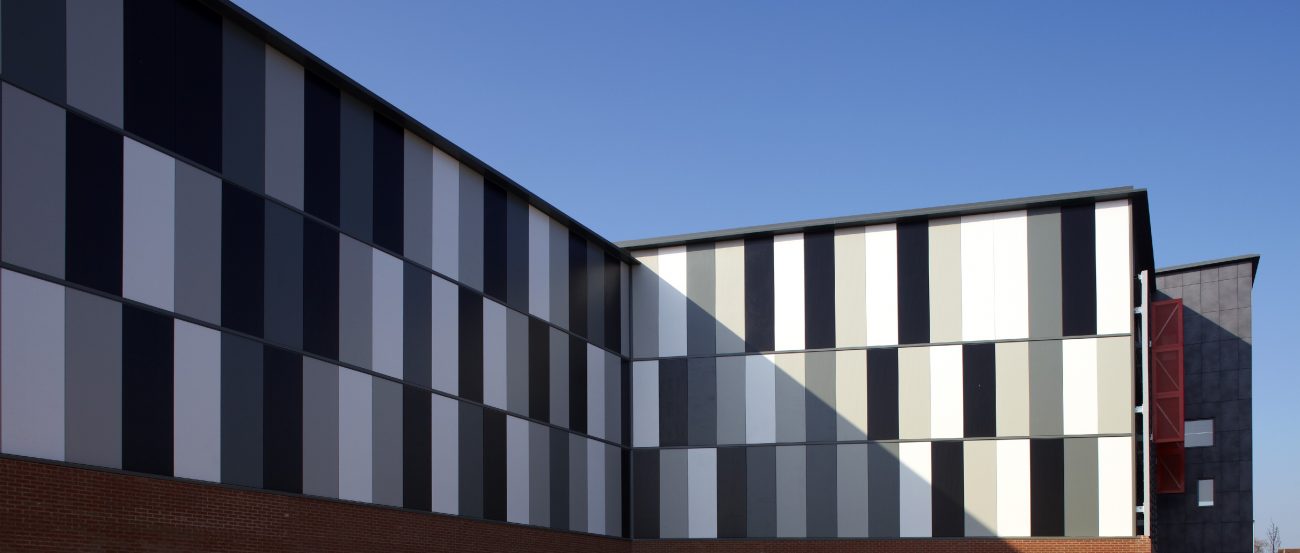
HPL is used on residential, office, retail and mixed-use façades where designers need lightweight cladding with consistent colors and clean joint patterns.
Balconies and Balustrade Infill Panels
Compact HPL may be used for balcony cladding and privacy screens. Where panels form part of fall protection, use only tested constructions supported by structural calculations and applicable approvals.
Soffits, Canopies and Entrance Areas
The material can create coordinated wall, soffit and entrance finishes. Horizontal or overhead applications require appropriate thickness, fixing and drainage details.
Schools, Hospitals and Public Buildings
Impact resistance, cleanability and design flexibility make exterior HPL useful for public buildings. Fire, accessibility and maintenance requirements should be considered early in the specification.
Outdoor Furniture and Privacy Screens
Exterior compact HPL can also be fabricated into outdoor tables, benches, screens and decorative elements where moisture resistance and easy cleaning are priorities.
How Do HPL Panels Compare with Other Exterior Cladding Materials?
| Material | Main Advantages | Main Considerations |
| Exterior compact HPL | Design range, impact resistance and low routine maintenance | Fire compliance, thermal movement and engineered fixing |
| Fiber cement | Good fire options and mineral appearance | Weight, brittle edges and dust during fabrication |
| Aluminum composite panel | Lightweight, formable and widely available | Core composition and façade-system fire performance |
| Solid aluminum | Non-combustible metal and high design flexibility | Higher material cost and potential denting |
| Natural wood | Authentic natural appearance | Regular maintenance, weathering and fire treatment |
| Ceramic or terracotta | Strong weathering and fire performance | Weight, fragility and specialized support systems |
There is no universally best façade panel. The correct choice depends on fire regulations, building height, climate, wind load, design intent, maintenance access, budget and local installation expertise.
How to Choose the Right HPL Outdoor Wall Panel
1. Define the Application and Building Risk
State the building type, height, panel location, climate, elevation orientation and intended use. Requirements for a low-rise decorative wall can differ substantially from those for a high-rise façade or balcony balustrade.
2. Specify a Genuine Exterior Grade
Require an exterior-grade compact laminate supported by a current technical data sheet. Do not approve the material based solely on product photographs or a verbal claim of UV resistance.
3. Determine Fire and Code Requirements
Obtain written requirements from the façade consultant, fire engineer or approving authority before ordering samples or requesting quotations.
4. Select Thickness Through Engineering
Thickness should be based on panel dimensions, design wind pressure, support spacing, fixing method and impact requirements. Choosing the thickest product without reviewing the support system can add unnecessary cost and weight.
5. Evaluate Color and Surface Performance
Review physical samples outdoors and verify whether the selected decor is covered by the same weathering and warranty terms as standard colors.
6. Optimize Sheet Size and Cutting Yield
Compare the façade module with available master-sheet sizes. A professional cutting plan can reduce waste, machining cost and the number of visible joints.
7. Confirm the Complete Installation System
Specify brackets, rails, fasteners, fixed points, sliding points, cavity, membrane and fire barriers. Confirm material compatibility to prevent corrosion, staining or premature system failure.
International Procurement Checklist
| Item to Verify | What to Request |
| Product identity | Manufacturer, product name, grade and product code |
| Exterior performance | EN 438 classification and weathering data |
| Fire compliance | Full report showing classification, thickness and mounting scope |
| Mechanical properties | Strength, dimensional stability and fixing data |
| Specifications | Thickness, dimensions, tolerances, finish and core color |
| Samples | Physical approval sample from the proposed product range |
| Machining | Approved shop drawings, tolerances and edge quality standard |
| Color control | Batch policy and acceptable color variation |
| Packaging | Flat pallets, protective film, corner protection and moisture barrier |
| Traceability | Batch numbers and production inspection records |
| Warranty | Duration, coverage, exclusions and claim procedure |
| Commercial terms | MOQ, lead time, Incoterm, payment and replacement policy |
What Should Be Included in an RFQ?
A professional request for quotation should include:
Project country, city and delivery destination
Building type, height and panel application
Required exterior-grade standard
Required fire classification and test standard
Panel thickness, size, quantity and finish
Master sheets or CNC-cut panels
Approved drawings and machining requirements
Fixing system and substructure material
Required certificates and test reports
Packaging, inspection and delivery requirements
Providing this information allows suppliers to quote comparable products and reduces the risk of receiving an attractive price for a technically unsuitable panel.
Installation Principles for Exterior HPL Panels
Store panels flat, dry and protected before fabrication.
Use sharp carbide- or diamond-tipped tools recommended for compact laminate.
Maintain the required edge distances around drilled holes and cutouts.
Use one or more engineered fixed points and appropriate sliding points.
Allow sufficient joint width for dimensional movement.
Use corrosion-resistant, compatible fasteners.
Keep the substructure straight, aligned and adequately anchored.
Provide continuous drainage and ventilation behind the panels.
Install cavity barriers and flashings according to the approved design.
Follow the panel and system manufacturer’s current instructions.
Fastener spacing and joint dimensions should not be copied from another project. They must be calculated for the selected panel size, thickness, wind load and support system.
How to Clean and Maintain HPL Exterior Wall Panels
Routine cleaning normally requires clean water, mild detergent and a soft cloth, sponge or non-abrasive brush. Work from the top downward and rinse away detergent residue.
Test graffiti remover, solvent or specialist cleaner on a concealed area before widespread use. Avoid abrasive pads, sharp tools and aggressive chemicals that could alter the surface.
Periodic façade inspections should check:
Loose, corroded or missing fasteners
Cracks around holes, corners and cutouts
Blocked drainage or ventilation openings
Damaged flashings, membranes or fire barriers
Unexpected color change or surface deterioration
Common Buying and Specification Mistakes
Using Interior HPL Outdoors
Interior laminate may fade, warp or deteriorate after prolonged exterior exposure. Require documented exterior-grade performance.
Selecting Thickness by Price Alone
An underspecified panel may deflect or overload its fixing points. An unnecessarily thick panel increases material, shipping and substructure costs.
Treating the Panel as the Complete Wall System
Water resistance, thermal performance and fire safety depend on the complete wall assembly, not the decorative panel alone.
Accepting an Unrelated Fire Certificate
Confirm that the certificate covers the quoted manufacturer, product, thickness, mounting arrangement and field of application.
Ignoring Thermal Movement
Overtightened fasteners, undersized holes or insufficient joints can restrain panel movement and cause buckling or cracking.
Approving Color from a Screen
Always approve physical samples under the project’s expected daylight conditions.
Ordering Without Spare Panels
Future batches may show minor color or texture differences. Consider ordering an agreed quantity of replacement panels with the original batch.
Frequently Asked Questions
Are HPL Outdoor Wall Panels Waterproof?
Exterior compact HPL is highly resistant to moisture, but the complete wall is not made waterproof by the panel alone. Joints, cavity drainage, flashings and the weather barrier manage water penetration.
Can Standard HPL Be Used Outdoors?
Standard interior HPL should not be used for permanent exterior exposure unless the manufacturer explicitly approves and documents that application.
What Thickness Is Best for Exterior HPL Cladding?
There is no universal best thickness. Common façade options include 6, 8, 10 and 12 mm, but the correct selection depends on panel dimensions, wind pressure, support spacing and fixing method.
Do Exterior HPL Panels Fade?
Quality exterior-grade panels are designed to limit color change, but no exterior surface is completely unaffected by long-term weathering. Review color-specific test data and warranty conditions.
Are HPL Panels Suitable for Coastal Climates?
They may be suitable when supported by relevant weathering data. The substructure and fasteners must also resist salt-related corrosion, and more frequent cleaning may be necessary.
Are HPL Outdoor Panels Fireproof?
No HPL product should be described as fireproof without qualification. Fire-retardant grades can achieve specified reaction-to-fire classifications, but approval depends on the complete façade system and local code.
Does HPL Exterior Cladding Provide Insulation?
The HPL panel itself provides limited insulation. Most thermal performance comes from the insulation and cavity within the complete wall assembly.
Can Exterior HPL Panels Be Cut to Size?
Yes. Panels can be CNC-cut, drilled and prepared from approved CAD or PDF drawings. Factory fabrication can improve consistency and reduce onsite work.
How Long Do HPL Exterior Panels Last?
Service life depends on product quality, climate, orientation, detailing, installation and maintenance. Evaluate manufacturer warranties and reference projects rather than relying on an unsupported lifespan claim.
How Do I Verify an Exterior HPL Supplier?
Match the manufacturer and product code across the quotation, technical sheet, samples and test reports. Audit production capacity where appropriate and arrange pre-shipment inspection for major orders.
Final Recommendation
HPL outdoor wall panels offer a strong combination of weather resistance, impact durability, low routine maintenance and architectural flexibility. Their performance, however, depends on selecting a genuine exterior grade and integrating it into a correctly engineered façade system.
Before ordering, confirm the exterior classification, fire requirements, weathering performance, panel thickness, fixing design and certificate scope. Approve physical samples and fabrication drawings, then ensure the delivered product matches the documented material.
For an accurate quotation, provide the project location, application, required fire rating, panel thickness, dimensions, finish, quantity and installation system. A technically complete inquiry produces more reliable pricing and significantly lowers procurement risk.
 Русский
 English
 العربية
 Français
 Español
 Português
 Deutsch
 italiano
 日本語
日本語 한국어
한국어 Nederlands
 Tiếng Việt
 ไทย
ไทย Polski
 Türkçe
 አማርኛ
አማርኛ Bahasa Melayu
 தமிழ்
தமிழ் Filipino
 Bahasa Indonesia
 magyar
 Română
 Монгол
 қазақ
қазақ Српски
 हिन्दी
 فارسی
فارسی Kiswahili
 Slovenčina
 Slovenščina
 Svenska
 українська
 Ελληνικά
 Suomi
Suomi Հայերեն
 עברית
עברית اردو
اردو Shqip
Shqip বাংলা
বাংলা Hrvatski
 Afrikaans
 Māori
Māori සිංහල
සිංහල Oʻzbekcha
 latviešu
 Беларуская мова
 Bosanski
 Български
 ქართული
 Lietuvių
 Malti
Malti Runasimi