Views: 0 Author: Site Editor Publish Time: 2025-11-13 Origin: Site
Outdoor and indoor high-pressure laminate (HPL) panels may look similar, but they are designed for different environmental conditions. Exterior-grade HPL must be selected for exposure to sunlight, rain, temperature changes, and outdoor weathering, while interior HPL products are primarily intended for furniture, cabinetry, partitions, wall panels, and other indoor applications.
For architects, facade contractors, building material distributors, furniture manufacturers, and international project buyers, selecting the correct HPL grade is essential. A decorative laminate that performs well in an office or hotel may not be suitable for an exposed building facade.
Quick answer: The main difference between outdoor and indoor HPL is their intended performance environment. Exterior-grade compact HPL is developed and tested for specified weathering conditions, including sunlight and moisture exposure. Indoor HPL prioritizes decorative appearance and performance under its designated interior conditions. Neither grade should be substituted for the other without checking product specifications.
This guide compares outdoor and indoor phenolic laminate construction, UV resistance, moisture performance, dimensional stability, technical standards, installation requirements, applications, and purchasing considerations.
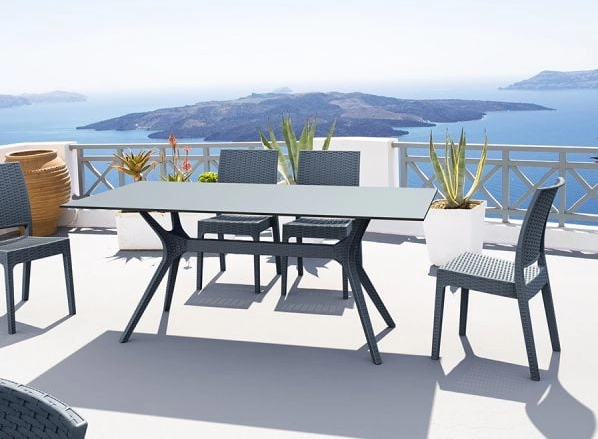
Exterior and interior HPL panels require different performance evaluations according to their installation environments.
Request Outdoor or Indoor HPL Product Information
Exterior and interior HPL products are both based on high-pressure laminate technology, but the correct product grade depends on exposure conditions and the applicable performance requirements.
Exterior-grade compact laminate and interior decorative HPL should not be compared only by appearance or thickness. Their surface technologies, product classifications, intended applications, and installation requirements can differ significantly.
| Comparison Factor | Outdoor HPL Phenolic Laminate | Indoor HPL Phenolic Laminate |
|---|---|---|
| Main Purpose | Exterior architectural applications requiring specified weathering performance. | Furniture, interior decoration, partitions, work surfaces, and wall panels. |
| UV Resistance | Exterior-grade surfaces are developed for defined sunlight exposure and color stability requirements. | Depends on the laminate grade; ordinary interior products should not be assumed suitable for prolonged outdoor UV exposure. |
| Weather Resistance | Designed for specified outdoor conditions, including rain, temperature changes, and weathering. | Designed for the manufacturer's intended interior environment and cleaning conditions. |
| Moisture Performance | Suitable grades provide moisture-resistant compact construction; installation must also manage water and drainage. | Varies by panel construction, substrate, adhesive, edge treatment, and exposure conditions. |
| Dimensional Stability | Must accommodate panel expansion and contraction under changing outdoor conditions. | Dimensioning and movement allowances depend on the material and indoor application. |
| Surface Technology | May use weather-resistant surface treatments, stabilized decorative layers, or other manufacturer-specific technologies. | Includes matte, glossy, woodgrain, textured, anti-fingerprint, and other decorative surface options. |
| Technical Evaluation | Exterior HPL classification, weathering, dimensional performance, and applicable building requirements. | Relevant laminate classification, wear resistance, cleaning, decorative quality, and application-specific performance. |
| Installation System | Often installed with a designed exterior cladding or facade support system. | May be bonded to substrates or installed using appropriate furniture and interior panel fixing methods. |
| Typical Cost Factors | Exterior product grade, weathering requirements, facade engineering, fixings, and installation. | Decorative grade, substrate, fabrication, finishing, and interior installation. |
| Common Applications | Facades, ventilated cladding, selected balcony panels, soffits, and outdoor furniture. | Cabinets, interior partitions, countertops, furniture, doors, and wall panels. |
Important distinction: Outdoor-grade HPL is not automatically superior in every respect. An interior specialty HPL may provide surface characteristics that are more appropriate for a laboratory worktop, kitchen cabinet, or furniture application. Product selection must follow the actual performance requirements.
High-pressure decorative laminate generally consists of layers of fibrous material impregnated with thermosetting resins, consolidated under heat and pressure.
The core commonly uses paper impregnated with phenolic-based resin, while the decorative surface may use melamine-based or other suitable thermosetting resin systems.
Exact material formulations and manufacturing processes vary between producers and product families. Consequently, performance should be assessed using the manufacturer's product classification and technical data rather than assumptions about a universal resin composition or pressing temperature.
Exterior-grade compact HPL is intended for use under specified outdoor conditions. Manufacturers may incorporate surface treatments or decorative layers designed to improve resistance to weathering, light exposure, and surface aging.
The exact method can differ. Some manufacturers use specialized surface curing technologies, while others rely on different protective layer or resin technologies. Not every outdoor HPL panel has the same coating construction or treatment on both faces.
A buyer should verify the selected product's weathering classification, declared surface properties, and installation limitations rather than assuming that all exterior HPL boards are technically identical.
Interior HPL is available in different constructions. Thin decorative HPL is generally bonded to a suitable supporting substrate such as MDF, plywood, or particleboard. Compact-grade interior HPL can be used in self-supporting applications when the selected thickness and structural design are appropriate.
Interior products may include woodgrain finishes, solid colors, textured surfaces, anti-fingerprint treatments, and specialty grades for defined technical applications.
For furniture manufacturing, the performance of a thin HPL-faced panel also depends on the substrate, adhesive, balancing construction, and edge finishing.
Exterior facade panels can be exposed to direct sunlight for extended periods. Depending on geographic location, facade orientation, shading, and the surrounding environment, the intensity of exposure can vary considerably.
Sunlight and outdoor weathering can affect decorative surfaces through color change, fading, gloss variation, chalking, or other forms of surface deterioration.
Exterior-grade HPL products are developed to meet specified weathering performance requirements. The relevant test results and exposure classification help architects and project buyers evaluate whether the laminate is appropriate for the intended climate.
A product described only as UV-resistant should not be accepted automatically for an exterior facade without additional technical information.
Ordinary indoor decorative laminate should not be assumed suitable for continuous outdoor weather exposure.
If an unapproved product is installed on an exterior building surface, sunlight, moisture, and temperature cycling may contribute to excessive color change, surface aging, joint deterioration, or other forms of damage.
The actual failure mechanism and rate depend on the laminate construction, installation, climate, and exposure. There is no reliable universal timeframe for indoor HPL failure outdoors.
Procurement recommendation: For projects involving direct sun, rain, or frost, specify an exterior-grade material supported by appropriate technical documentation.
Exterior compact HPL generally offers moisture-resistant construction suitable for specified outdoor applications. However, moisture resistance does not mean zero water absorption or unlimited resistance to every wet condition.
Panel movement, drainage, ventilation, fixing details, and joint design are also important. Water trapped behind a facade panel can affect the supporting construction, even when the decorative laminate itself remains serviceable.
The complete exterior cladding assembly should be evaluated for water management and local climatic conditions.
Exterior HPL panels are exposed to changes in temperature and relative humidity. The material can expand or contract as environmental conditions change, and the supporting structure may move differently.
A facade panel receiving direct sunlight can also experience different temperatures from the shaded or ventilated space behind it.
To accommodate these conditions, exterior cladding designs must account for panel movement, support spacing, fixing details, and manufacturer-defined expansion clearances.
Incorrectly restrained panels may develop stress around fixing holes, local distortion, cracking, or installation-related problems.
Many exterior compact HPL facade systems distinguish between fixed points and sliding points to permit controlled panel movement.
Fastener positions, hole dimensions, edge distances, and allowable spans should be established using the manufacturer's current installation guidance and the project's structural design.
Using the wrong fasteners, over-tightening fixings, or omitting movement allowances can compromise the installation even if a suitable exterior-grade board is selected.
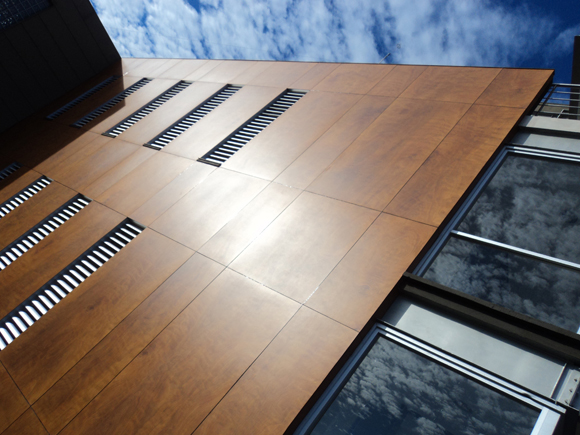
Exterior HPL panel design must account for material movement, fixing systems, support spacing, and environmental exposure.
Indoor HPL products operate under different environmental conditions, but dimensional movement and substrate compatibility remain important.
For furniture and wall panels, proper conditioning, balanced construction, adhesive selection, and suitable fixing arrangements help maintain flatness and bonding integrity.
An interior compact laminate may also require movement allowances, depending on panel size, installation conditions, and the manufacturer's recommendations.
Exterior HPL products are available in decorative ranges intended for outdoor architectural applications. Depending on the manufacturer, these may include solid colors, woodgrain patterns, stone effects, and other facade finishes.
Exterior-grade decorative surfaces are developed to maintain suitable appearance and performance within their specified exposure conditions.
Buyers should review weathering performance, expected color variation, surface texture, cleaning guidance, and the warranty conditions applicable to the exact product.
Special properties such as anti-graffiti performance or enhanced chemical resistance should only be specified when available on the selected grade and supported by relevant product information.
Indoor HPL product ranges commonly emphasize decorative variety, tactile finishes, resistance to everyday wear, and ease of cleaning.
Different laminate grades may provide matte, glossy, textured, woodgrain, stone-look, fabric-inspired, or anti-fingerprint appearances.
Specialized indoor products can also be selected for defined laboratory, furniture, or institutional requirements. Fire classification, antibacterial performance, and chemical resistance must be evaluated individually rather than assumed for all indoor laminates.
Appropriately specified exterior HPL panels can be considered for architectural projects where sunlight, rain, wind, and changing temperatures form part of the normal service environment.
Typical exterior applications include:
Commercial and residential building facades
Ventilated rainscreen cladding systems
Exterior wall decoration and refurbishment projects
Selected balcony cladding or screening applications
Canopies, soffits, and sunshade elements
Outdoor furniture and public benches using approved grades
Exterior signage and decorative architectural features
Transportation facilities and other public exterior installations
For balconies, facades, and public buildings, panel selection must account for project-specific structural, fire, and installation requirements. Exterior-grade material approval alone does not establish suitability for every building application.
Indoor decorative laminate and compact HPL products are used in a wide range of residential and commercial interiors.
Typical indoor applications include:
Kitchen cabinets and furniture fronts
Office desks, workstations, and storage units
Reception counters and commercial furniture
Restroom partitions and toilet cubicles
Interior wall panels and decorative cladding
Doors, shelves, and retail fixtures
Hotel and hospitality furniture
Laboratory worktops using suitable chemical-resistant grades
For areas involving frequent cleaning, high abrasion, moisture, or chemicals, identify the specific performance requirements before choosing a laminate construction.
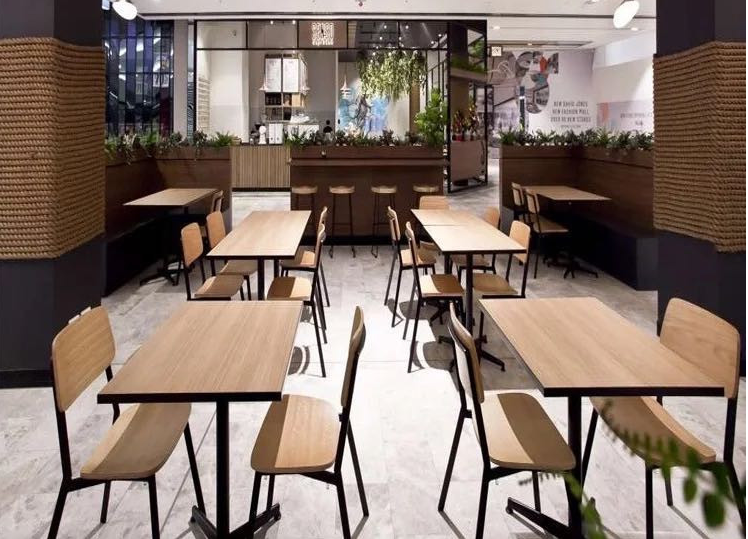
Interior laminate panels provide decorative solutions for offices, furniture, partitions, and architectural interiors.
Exterior-grade HPL manufacturing requires the producer to control the material construction and finished product characteristics necessary to achieve the intended weathering performance.
Important quality-control considerations may include resin and paper compatibility, laminate consolidation, decorative surface integrity, dimensional tolerances, and verification of relevant performance tests.
However, higher manufacturing pressure or greater board density alone does not establish superior exterior quality. A suitable product should demonstrate compliance with the technical requirements applicable to its intended use.
Interior HPL production may prioritize decorative consistency, surface finish, dimensional tolerances, abrasion resistance, and bonding suitability.
For thin decorative HPL, the finished furniture assembly also depends on substrate preparation, adhesive compatibility, pressing conditions, panel balancing, and edge banding.
For compact interior HPL, machining quality, panel dimensions, structural support, and installation conditions remain important.
Product names such as premium HPL, exterior phenolic board, fire-resistant laminate, waterproof compact panel, or architectural-grade HPL may describe general product positioning rather than a verified classification.
For procurement, compare products using their actual technical data sheets, relevant standards, test reports, and specified service environments.
Professional facade projects require more detailed material verification than ordinary decorative furniture purchases.
Standards and testing documents help buyers understand whether the proposed HPL grade is appropriate for the project. Compliance should be established using documentation applicable to the actual product, not merely a manufacturer's general catalogue.
EN 438-6:2016 covers the classification and specifications of exterior-grade compact high-pressure laminates with a thickness of 2mm or greater.
The standard addresses products intended for outdoor conditions involving sunlight, rain, and frost. It distinguishes performance requirements for moderate and severe outdoor exposure and includes standard and flame-retardant product categories.
When sourcing exterior HPL for architectural projects, buyers should request the relevant product classification and supporting technical evidence.
EN 438-7:2005 addresses specified requirements for compact laminate and HPL composite panels used as internal and external wall and ceiling finishes.
Its scope concerns non-structural panel applications and does not itself cover facade fixing systems. Therefore, material documentation and installation-system verification are separate procurement considerations.
The required reaction-to-fire classification depends on the product, country, building type, height, facade arrangement, and applicable regulations.
For projects where fire performance is required, request the appropriate classification documentation and verify that its scope covers the proposed panel construction and installation conditions.
Not every exterior HPL panel has the same fire classification. Different regional classification systems should not be treated as directly interchangeable without the relevant technical assessment.
| Document or Test | Why It Matters |
|---|---|
| Exterior-Grade Product Data Sheet | Identifies the product construction, dimensions, grade, and intended exterior application. |
| Relevant EN 438 Classification | Helps establish whether the laminate meets specified exterior-grade requirements. |
| UV and Weathering Test Information | Supports evaluation of color change, surface appearance, and weathering resistance under defined test conditions. |
| Fire Classification Report | Helps verify the applicable reaction-to-fire classification for the exact panel and installation conditions. |
| Moisture and Dimensional Stability Data | Provides information relevant to changes in temperature and humidity. |
| Installation Guide | Defines recommended fixing methods, support details, movement allowances, and installation limitations. |
| Warranty Terms, If Offered | Clarifies the applicable coverage, duration, geographic conditions, and exclusions. |
| Project-Specific Structural Documentation | Supports verification of wind loads, substructure design, fixings, and other engineering requirements. |
Accelerated weathering tests provide controlled comparative information, but they do not independently guarantee a specific number of years of service in every climate.
Exterior HPL is often installed as part of a designed ventilated facade or rainscreen cladding system.
Depending on the system, components may include supporting rails, brackets, suitable mechanical fasteners, approved concealed fixing arrangements, ventilation cavities, drainage paths, and movement joints.
Important installation requirements include:
Suitable subframe design and attachment to the building structure
Design wind loads and panel support spacing
Panel thickness and maximum permissible spans
Fixed points and sliding points where specified
Expansion joints and suitable edge clearances
Corrosion-resistant fasteners appropriate for the environment
Ventilation and water drainage behind the cladding
Relevant fire-safety details and facade cavity requirements
Compatibility of panel, fixing system, and substrate
The manufacturer's installation manual and a qualified project designer should determine actual fixing dimensions, fastener spacing, movement allowances, and system details.
Incorrect installation can lead to panel stress, fastening failures, water accumulation, or other facade problems regardless of the quality of the decorative panel.
Interior HPL commonly forms part of furniture and decorative wall panel assemblies.
Thin decorative laminate may be bonded to MDF, plywood, particleboard, or other approved substrates using compatible adhesives and appropriate pressing procedures.
Compact interior panels may use mechanical fixings or other suitable installation methods, depending on the application.
Key fabrication and installation considerations include surface preparation, panel balancing, adhesive selection, edge finishing, machining tolerances, flatness, and accommodation of material movement where required.
When exterior cladding panels develop defects, the cause should be investigated systematically. An appearance problem is not always a material manufacturing defect, and several factors may contribute to the same symptom.
| Observed Problem | Possible Contributing Factors | Recommended Investigation |
|---|---|---|
| Color fading or uneven appearance | Surface grade, UV exposure, facade orientation, contamination, or weathering | Review product grade, reference samples, cleaning condition, and relevant weathering data |
| Panel distortion or localized bowing | Environmental movement, inadequate support, restricted expansion, or installation stresses | Check fixing arrangement, spans, movement allowances, and installation records |
| Cracking near mounting holes | Improper hole sizes, over-tightened fasteners, excessive loads, or inadequate edge distances | Review installation details and structural design |
| Water accumulation behind panels | Restricted drainage, inadequate ventilation, or incorrect cavity detailing | Inspect the cladding system, drainage paths, and surrounding building envelope |
| Surface marks and difficult-to-clean deposits | Pollution, inappropriate cleaning agents, or incompatible surface treatments | Identify contamination and follow the product-specific cleaning instructions |
Where structural safety, loose panels, or failed fixings are suspected, the affected facade area should be assessed by qualified professionals before remedial work proceeds.
Exterior and interior HPL products should be compared using equivalent specifications rather than material price alone.
Exterior-grade panels may have additional manufacturing, testing, and system requirements related to their intended weather exposure. However, actual prices depend on product grade, thickness, dimensions, surface finish, quantity, sourcing location, and delivery terms.
For facade projects, the completed installation may also require engineered subframes, brackets, suitable fixings, ventilation provisions, fire-safety details, and installation labor.
Indoor decorative panels may involve different costs for supporting substrates, lamination adhesives, edge banding, furniture machining, and installation.
A professional comparison should consider the total installed system cost, expected maintenance, potential repairs, and replacement requirements.
Lifecycle cost principle: The lowest initial material quotation is not necessarily the lowest overall project cost. Using an unsuitable grade can introduce avoidable repair and replacement risks.
For buildings exposed to rain, sunlight, frost, and outdoor temperature changes, evaluate exterior-grade compact laminate products supported by the applicable product classification and technical documentation.
The chosen grade should match the climate, facade orientation, support system, building requirements, and intended application.
For furniture, cabinets, partitions, worktops, and interior decorative panels, select a product designed for the required decorative and functional conditions.
A standard interior decorative laminate may be suitable for ordinary furniture, while selected compact, chemical-resistant, or specialty grades may be more appropriate for particular applications.
Before purchasing, confirm the exact product grade and request appropriate technical documents for weathering, surface durability, moisture performance, fire classification, or other project-specific requirements.
Test reports should be reviewed for their product identification, testing method, and applicability to the proposed construction.
Panel thickness should be selected according to application, dimensions, support spacing, loading, and fixing requirements.
For facade projects, do not select thickness by price alone. Obtain an appropriate structural and installation assessment for the complete panel system.
The following checklist helps architects, importers, wholesalers, and project contractors compare HPL products using consistent purchasing criteria.
| Checklist Item | Outdoor HPL Buyer Should Confirm | Indoor HPL Buyer Should Confirm |
|---|---|---|
| Application Environment | Climate, sunlight, rain, building location, facade orientation, and outdoor exposure | Furniture function, indoor humidity, cleaning frequency, and decorative requirements |
| Performance Documents | Exterior grade, UV weathering, dimensional stability, and relevant fire information | Surface wear, impact, stain resistance, cleanability, and applicable special requirements |
| Installation System | Facade subframe, fixings, support spacing, ventilation, drainage, and movement allowances | Adhesives, substrates, edge banding, furniture fixings, and wall panel supports |
| Thickness and Dimensions | Panel dimensions, structural requirements, thickness, and fixing compatibility | Sheet dimensions, laminate thickness, supporting core, and fabrication requirements |
| Decorative Finish | Approved exterior color, texture, reference sample, and weathering requirements | Color, woodgrain, gloss, texture, and matching requirements |
| Warranty | Whether an applicable exterior warranty is offered and its conditions | Whether an applicable interior warranty is offered and its conditions |
| Commercial Terms | Quantity, production feasibility, packaging, destination, and agreed trade terms | Quantity, decorative options, fabrication requirements, packaging, and delivery terms |
POLYBETT supplies high-pressure laminate and phenolic compact laminate products for furniture, interior construction, and selected exterior architectural applications.
For international distributors, facade contractors, furniture manufacturers, and commercial project buyers, the following POLYBETT product categories provide a starting point for evaluating suitable materials.
POLYBETT's Exterior HPL Panel category includes phenolic laminate products intended for exterior cladding and related architectural applications.
The published product range includes exterior compact HPL panels in selected thicknesses, decorative finishes, and sheet dimensions.
Buyers should review the proposed product's exterior classification, weathering documentation, required fire performance, and compatibility with the intended facade system.
For project-specific details, visit the POLYBETT Exterior HPL Wall Panel product information page.
The POLYBETT High Pressure Laminate collection includes decorative surface products for furniture, cabinets, interior wall panels, and related applications.
Available designs and constructions should be selected according to the intended application, supporting substrate, decorative requirements, and necessary technical performance.
POLYBETT also supplies phenolic compact laminate boards for applications including furniture, partitions, and selected commercial interior constructions.
The appropriate board thickness, fixing details, and performance grade depend on the final product design.
To evaluate product suitability, send POLYBETT the required application, dimensions, thickness, color, finish, quantity, destination, and relevant technical specifications.
For exterior facade projects, also provide elevation drawings, fixing details where available, building location, intended exposure conditions, and applicable fire or building-code requirements.
Request POLYBETT HPL Panel Specifications and Pricing
The main difference is the intended use environment and corresponding performance requirements. Exterior-grade HPL is developed for specified outdoor weather conditions, including sunlight and rain. Interior HPL is designed for furniture, decorative surfaces, and indoor applications. The exact properties depend on the product grade and technical documentation.
Ordinary indoor HPL should not be specified for exterior wall cladding unless the manufacturer expressly approves the exact product for the intended outdoor conditions. Indoor-only grades may not provide suitable weathering performance, and facade use also requires a compatible installation system.
Exterior-grade products can involve additional requirements for surface weathering, product testing, and intended outdoor performance. However, actual prices depend on grade, thickness, dimensions, production volume, finish, and sourcing conditions. Completed facade installation costs also depend on the support and fixing system.
Exterior compact HPL is developed to resist outdoor moisture conditions, but it should not automatically be described as having zero water absorption or being suitable for every form of prolonged water exposure. Correct joints, fixings, ventilation, drainage, and installation are also essential to the performance of the complete system.
Appropriate exterior-grade HPL can be used for ventilated facades, exterior wall panels, selected balcony applications, soffits, architectural screening, outdoor furniture, and other applications approved for the specific material grade. Structural and building-code requirements must be considered separately.
Indoor HPL is used for kitchen cabinets, furniture panels, office desks, restroom partitions, interior wall panels, doors, shelves, reception counters, and other decorative or functional interior surfaces. Specialty grades may be selected for laboratory and other technical applications.
Review the manufacturer's product data sheet, applicable exterior classification, weathering performance information, intended application, installation guidance, and test documentation. For facade projects, also check fire-performance requirements and the compatibility of the complete cladding system.
Exterior-grade HPL is developed to meet defined weathering and color stability requirements, but some appearance change may occur over time. Performance depends on the selected product, color, climate, facade orientation, exposure conditions, and cleaning. Product-specific weathering data should be consulted.
Yes, when a laminate grade is specifically suitable for the intended laboratory use. Chemical resistance depends on the actual product and the chemicals, concentrations, temperatures, and exposure durations involved. A standard decorative HPL should not automatically be treated as laboratory-grade material.
The required thickness depends on panel dimensions, design wind load, support spacing, fixing method, building location, and product-specific installation requirements. Commonly offered panel thicknesses are not universal engineering recommendations. Final selection should be verified for the complete facade design.
EN 438-6:2016 specifies classification and performance requirements for exterior-grade compact HPL with a thickness of 2mm or greater. It distinguishes grades intended for moderate and severe outdoor conditions. Buyers should confirm which applicable classification the proposed product meets.
No. A material classification does not replace the engineering and regulatory requirements for the complete facade. Substructure, fixings, wind loads, movement joints, fire-safety provisions, and other installation details require separate verification according to applicable project requirements.
An exterior-grade panel may be considered for an interior application when its properties and construction suit the project. However, an outdoor grade is not automatically necessary or preferable for ordinary furniture or interior decoration. Compare surface finish, cost, fabrication, and relevant technical requirements.
Distributors should compare equivalent product classifications, technical documentation, sheet dimensions, thickness, decorative finish, manufacturing consistency, packaging, and commercial terms. For exterior projects, weathering information, applicable fire documentation, and installation compatibility should receive particular attention.
Provide the intended application, indoor or outdoor exposure, sheet dimensions, thickness, color, finish, estimated quantity, destination, and applicable technical requirements. For exterior projects, include building or facade drawings and relevant installation information where available.
The following manufacturer and standards resources provide additional information on exterior-grade laminate performance, panel classification, and installation requirements.
EN 438-6:2016 — Exterior-Grade Compact HPL Classification: Scope and performance requirements for exterior compact laminate.
EN 438-7:2005 — HPL Wall and Ceiling Panels: Scope of non-structural HPL panel applications for interior and exterior wall and ceiling finishes.
Trespa Meteon — Exterior Architectural HPL: Exterior decorative compact laminate and facade application information.
Fundermax — Exterior and Interior Technical Manuals: Manufacturer resources on panel performance, fixing systems, and installation requirements.
Greenlam Industries — HPL Grades and Applications: General guidance on decorative and specialty HPL product selection.
Technical results and installation methods are product-specific. The information provided by one manufacturer should not automatically be applied to a different laminate or facade system.
The difference between outdoor and indoor HPL phenolic laminate is primarily a matter of product classification, intended exposure conditions, and verified performance.
Exterior-grade compact HPL is developed for specified weather conditions and must be selected together with an appropriate cladding or support system. Interior HPL products offer decorative and functional options for furniture, cabinetry, partitions, work surfaces, and commercial interiors.
For professional procurement, the correct approach is to compare the exact laminate grade, relevant test reports, intended service environment, installation requirements, and total project cost.
POLYBETT supplies exterior HPL facade panels, decorative high-pressure laminates, and phenolic compact laminate boards for relevant architectural and furniture applications. Contact POLYBETT to discuss available product options for your project requirements.