This website uses cookies and similar technologies (“cookies”). Subject to your consent, will use analytical cookies to track which content interests you, and marketing cookies to display interest-based advertising. We use third-party providers for these measures, who may also use the data for their own purposes.
You give your consent by clicking "Accept all" or by applying your individual settings. Your data may then also be processed in third countries outside the EU, such as the US, which do not have a corresponding level of data protection and where, in particular, access by local authorities may not be effectively prevented. You can revoke your consent with immediate effect at any time. If you click on "Reject all", only strictly necessary cookies will be used.
As a leading manufacturer over 20 years. Our exquisite craftsmanship can meet all your requirements!
You are here:Home » Blog » How Does the Performance of Phenolic Chemical Resistant Board Countertops Compare for Laboratory Benches? Are They Worth Choosing?
How Does the Performance of Phenolic Chemical Resistant Board Countertops Compare for Laboratory Benches? Are They Worth Choosing?
Views: 0 Author: Site Editor Publish Time: 2025-11-27 Origin: Site
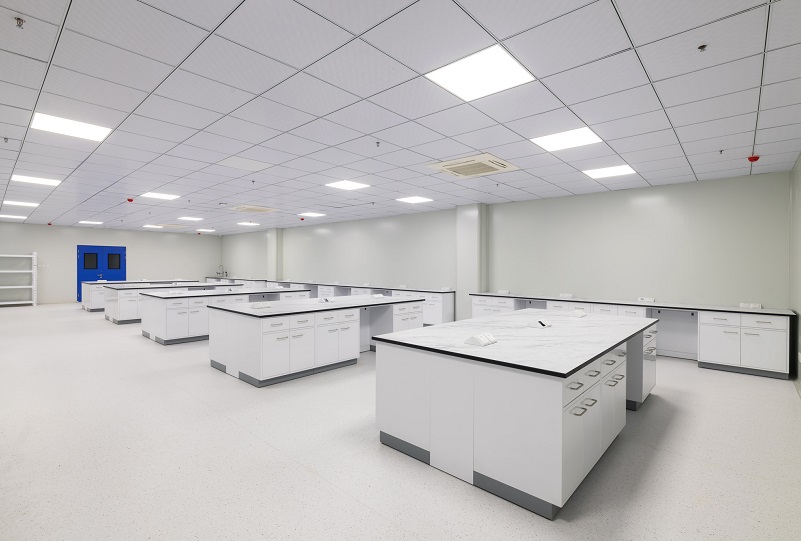
Laboratory benches are essential fixtures in all types of laboratories, serving as the primary workspace for experiments, testing, and equipment placement. Since the benchtop is the most frequently used component, choosing the right countertop material is crucial.
Among the many options available today, Phenolic Chemical Resistant Board countertops have become a highly popular choice in modern laboratories. But how do they perform? And are they worth selecting for your lab setup? This article will explain everything in detail.
Excellent Temperature Adaptability
Phenolic Chemical Resistant Boards are made using thermosetting resin, giving them exceptional resistance to sudden temperature changes. They can endure rapid temperature shifts between –20°C and 80°C without bending, cracking, or compromising stability.
Even during experiments involving shock heating or cooling, the board maintains its structure and appearance flawlessly.
Outstanding Fire Resistance
One of the standout features of Phenolic Chemical Resistant Boards is their superior fire resistance. The surface can come into contact with burning cigarette butts without blistering or damage. These boards:
Do not ignite easily
Do not melt, drip, or explode under high heat
Maintain stable performance even during long-term exposure
Unlike many traditional materials, they stay structurally sound in extreme conditions.
Additionally, with a dense, non-porous surface, the board does not absorb dust—even in heavily polluted environments. Any surface contamination can be safely cleaned using organic solvents without affecting the color or finish.
Excellent Moisture Resistance
Phenolic Chemical Resistant Boards are designed to withstand high humidity and wet environments.
Special thermosetting resins on both the surface and core ensure resistance to:
Moisture
Mold and fungus
Weather-related degradation
Corrosive environments
The dimensional stability and overall workability of these boards are comparable to high-quality hardwood—but with much greater durability and longevity. Even under continuous heavy use, the board retains both strength and appearance.
Easy Cleaning and Maintenance
Thanks to their compact, smooth, and non-porous surface, Phenolic Chemical Resistant Boards are extremely easy to clean.
They can be wiped using:
Ordinary detergents
Strong disinfectants
Organic solvents
None of these will fade the color or damage the surface. This makes the material especially suitable for laboratories requiring frequent disinfection and strict hygiene control.
Exceptional Chemical Resistance
As their name suggests, Phenolic Chemical Resistant Boards are engineered for environments that frequently encounter chemicals. They show strong resistance against:
Organic solvents (such as acetone and xylene)
Laboratory disinfectants and cleaning agents
Acids from fruits and juices
Dyes and staining agents
Because the internal structure is dense and uniform, the board’s chemical resistance is not merely superficial but extends throughout the entire material. When treated with additional specialty surface resins, the chemical resistance becomes even more robust.
Conclusion: Are Phenolic Chemical Resistant Board Countertops Worth Choosing?
Absolutely—Phenolic Chemical Resistant Boards are one of the best countertop materials for modern laboratory benches. They offer a balanced combination of:
High durability
Excellent temperature and fire resistance
Superior chemical and moisture resistance
Long-term structural stability
Simple, low-maintenance cleaning
Whether your laboratory handles chemicals, high temperatures, biological samples, or heavy equipment, a Phenolic Chemical Resistant Board countertop provides long-lasting, reliable performance.
 Русский
 English
 العربية
 Français
 Español
 Português
 Deutsch
 italiano
 日本語
日本語 한국어
한국어 Nederlands
 Tiếng Việt
 ไทย
ไทย Polski
 Türkçe
 አማርኛ
አማርኛ Bahasa Melayu
 தமிழ்
தமிழ் Filipino
 Bahasa Indonesia
 magyar
 Română
 Монгол
 қазақ
қазақ Српски
 हिन्दी
 فارسی
فارسی Kiswahili
 Slovenčina
 Slovenščina
 Svenska
 українська
 Ελληνικά
 Suomi
Suomi Հայերեն
 עברית
עברית اردو
اردو Shqip
Shqip বাংলা
বাংলা Hrvatski
 Afrikaans
 Māori
Māori සිංහල
සිංහල Oʻzbekcha
 latviešu
 Беларуская мова
 Bosanski
 Български
 ქართული
 Lietuvių
 Malti
Malti Runasimi