How to Clean and Maintain High Pressure Laminate
High Pressure Laminate, commonly known as HPL, is a durable and affordable decorative surface material used for countertops, flooring, cabinets, furniture, wall panels, commercial interiors, and residential decoration. It is valued for scratch resistance, moisture resistance, heat resistance, design flexibility, and easy maintenance.
Although HPL is built to withstand daily wear and tear, proper cleaning and maintenance are still important. Regular care helps preserve the surface finish, prevent stains, reduce scratches, protect edges, and extend the service life of HPL countertops, HPL furniture panels, HPL wall cladding, and compact laminate surfaces.
This guide explains how to clean High Pressure Laminate correctly, remove common stains, prevent heat and scratch damage, and maintain HPL surfaces for long-term performance.
What Is High Pressure Laminate?
High Pressure Laminate is a type of laminate made by bonding layers of paper or fabric with resin under high pressure and high temperature. The finished material is strong, stable, decorative, and resistant to scratches, moisture, stains, and moderate heat.
HPL is available in many colors, patterns, textures, and finishes, including solid color HPL, wood grain HPL, stone-look laminate, matte HPL, glossy HPL, anti-fingerprint laminate, fire-resistant HPL, compact laminate, and decorative high-pressure laminate sheets.
Advantages of High Pressure Laminate
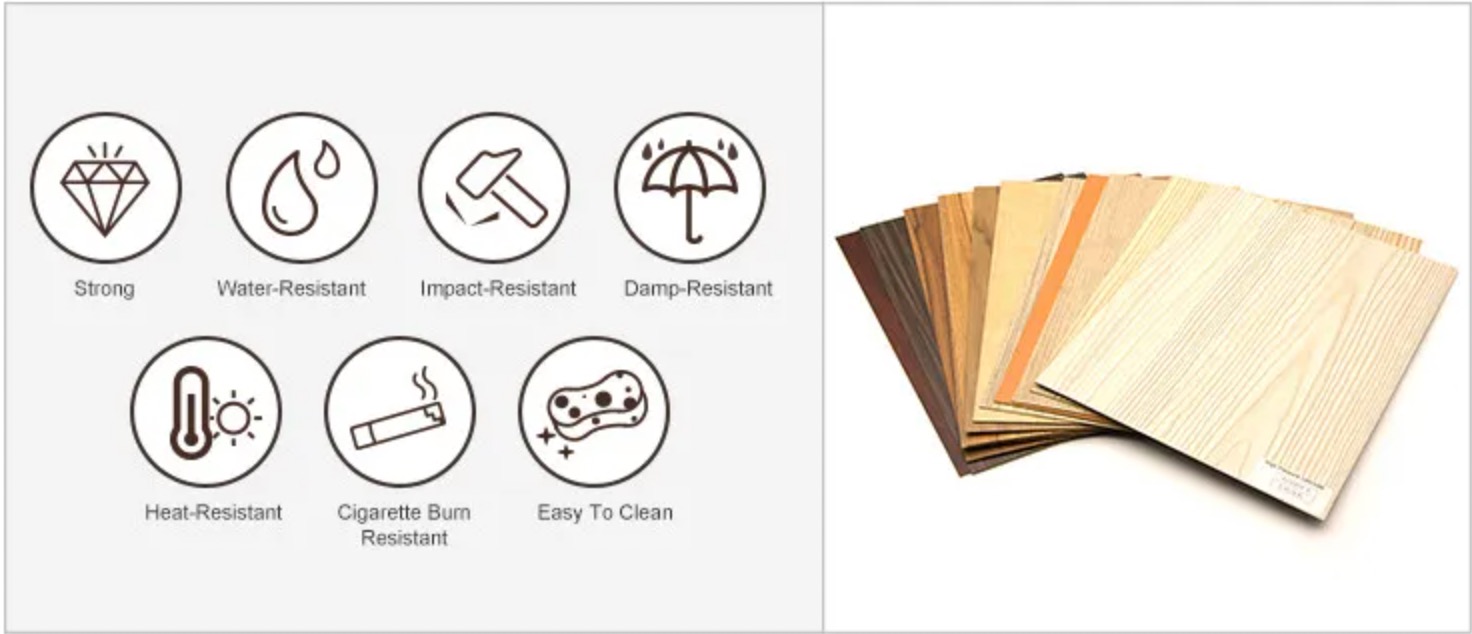
HPL offers a strong balance of performance, appearance, and cost. It is widely used in residential, commercial, healthcare, educational, laboratory, and public interior projects because it is practical and easy to maintain.
Durable and long-lasting: Suitable for surfaces exposed to daily use.
Scratch-resistant: Helps protect furniture, countertops, and wall panels from normal wear.
Moisture-resistant: Suitable for kitchens, bathrooms, cabinets, and commercial interiors.
Heat-resistant: Performs well under moderate heat when used correctly.
Easy to clean: Requires only simple daily cleaning in most cases.
Design flexible: Available in many colors, patterns, wood grains, and stone effects.
Cost-effective: More affordable than many stone, metal, or solid surface materials.
Common Uses for High Pressure Laminate
Because HPL is durable, cleanable, and decorative, it is used in many residential and commercial applications. The correct cleaning method may vary slightly depending on the surface finish, application, and exposure level.
Kitchen countertops and work surfaces
Flooring and decorative interior panels
Cabinets, wardrobes, and storage furniture
Office desks, tables, and commercial furniture
Wall panels and interior wall cladding
Bathroom partitions and compact laminate panels
Laboratory furniture and chemical-resistant worktops
Hospital, school, hotel, and retail interior surfaces

How to Clean High Pressure Laminate
Proper cleaning is essential for maintaining the appearance and integrity of HPL surfaces. In most cases, High Pressure Laminate does not require special cleaning products. A soft cloth, warm water, and mild detergent are enough for routine cleaning.
Daily Cleaning for HPL Surfaces
For daily cleaning, wipe the HPL surface with a soft damp cloth. If needed, use mild soap or neutral detergent. After cleaning, rinse the surface with clean water and dry it with a soft cloth to avoid water marks or detergent residue.
Avoid abrasive sponges, steel wool, rough pads, strong alkaline cleaners, and harsh solvents unless the manufacturer specifically approves them. These materials may scratch or dull the HPL finish.
Deep Cleaning for Dirt Buildup
For tougher dirt, fingerprints, grease, or buildup, use warm water mixed with a mild household cleaner. Wipe gently with a soft cloth or non-abrasive sponge, then rinse thoroughly with clean water and dry the surface.
For textured HPL, matte HPL, or anti-fingerprint laminate, clean along the texture direction where possible. This helps remove dirt from surface grooves without damaging the finish.
Stain Removal for HPL Countertops and Panels
Some stains may require targeted cleaning. Always test any cleaning method on a hidden area first, especially for special HPL finishes such as matte, anti-fingerprint, metallic, high-gloss, or textured laminate.
Grease or oil: Wipe with warm water and dish soap, rinse with clean water, and dry with a soft cloth.
Ink: Apply a small amount of rubbing alcohol to a soft cloth, gently wipe the stain, rinse thoroughly, and dry the surface.
Coffee or tea: Clean with mild detergent first. For stubborn stains, use a diluted vinegar-and-water solution, then rinse and dry.
Food stains: Remove spills quickly with warm water and mild detergent to prevent residue buildup.
Water marks: Wipe with a damp cloth and dry immediately with a clean soft towel.
How to Maintain High Pressure Laminate
In addition to regular cleaning, proper use and preventive care can help HPL surfaces maintain their appearance for many years. Good maintenance habits are especially important for countertops, cabinets, desks, wall panels, laboratory worktops, and high-traffic commercial surfaces.
Prevent Scratches on HPL Surfaces
HPL is scratch-resistant, but it is not completely scratch-proof. Avoid dragging heavy, sharp, rough, or metal objects across the surface. Use cutting boards on HPL countertops and protective pads under heavy objects.
Avoid Heat Damage on HPL Countertops
HPL has good heat resistance for normal use, but hot pans, kettles, irons, and cooking equipment should not be placed directly on the surface. Always use trivets, hot pads, or heat-resistant mats to protect HPL countertops and furniture panels.
Protect the HPL Finish
The protective surface layer helps maintain HPL appearance and durability. To protect the finish, use soft cloths, mild cleaners, and non-abrasive cleaning tools. Avoid strong solvents, polishing wax, scouring powder, and abrasive cleaners unless recommended by the manufacturer.
Protect HPL Edges from Moisture
Edges, joints, seams, and cutouts are more vulnerable to moisture than the flat surface. Wipe standing water promptly, especially around sinks, countertops, cabinet edges, and bathroom panels. Proper edge sealing and installation help extend the service life of HPL panels.
Dos and Don’ts of High Pressure Laminate Care
Dos for Cleaning HPL
Clean the surface regularly with a soft damp cloth.
Use mild soap or neutral detergent when needed.
Rinse cleaning residue with clean water.
Dry the surface with a soft cloth after cleaning.
Wipe spills and stains immediately.
Use cutting boards, trivets, coasters, and protective pads.
Follow the manufacturer’s cleaning guide for special HPL finishes.
Don’ts for Maintaining HPL
Do not use abrasive sponges, steel wool, or scouring pads.
Do not place hot cookware directly on HPL countertops.
Do not cut directly on the HPL surface.
Do not allow spills to sit for a long time.
Do not use harsh solvents without checking product guidance.
Do not drag heavy or sharp objects across the surface.
Do not leave standing water around edges, seams, or cutouts.
HPL Cleaning and Maintenance Checklist
| Care Task | Recommended Method | Purpose |
| Daily cleaning | Soft damp cloth with mild soap if needed. | Removes dust, fingerprints, and light dirt. |
| Deep cleaning | Warm water and mild household cleaner, followed by rinsing and drying. | Removes grease, residue, and dirt buildup. |
| Stain removal | Use dish soap, diluted vinegar, or rubbing alcohol depending on stain type. | Removes coffee, tea, ink, oil, and food stains. |
| Scratch prevention | Use cutting boards and avoid dragging sharp objects. | Protects the HPL decorative surface. |
| Heat protection | Use trivets, hot pads, and heat-resistant mats. | Prevents heat marks or surface damage. |
| Edge protection | Wipe water promptly and keep seams sealed. | Reduces swelling, moisture damage, and edge failure. |
Best Cleaning Products for HPL Surfaces
For most HPL surfaces, the safest cleaning products are mild, non-abrasive, and residue-free. Strong cleaners should only be used when necessary and should be tested on a hidden area first.
Recommended: Warm water, mild soap, neutral detergent, soft cloth, microfiber cloth, and non-abrasive sponge.
Use with care: Diluted vinegar, rubbing alcohol, and mild household cleaners for specific stains.
Avoid: Steel wool, abrasive powder, strong bleach, strong acids, strong alkalis, and harsh solvents unless approved for the specific HPL grade.
Maintenance Tips for Different HPL Applications
HPL Countertops
Clean HPL countertops daily, wipe spills immediately, use cutting boards, avoid direct contact with hot cookware, and protect sink areas from standing water. These habits help maintain countertop appearance and reduce edge damage.
HPL Furniture and Cabinets
For HPL furniture and cabinets, wipe fingerprints and dust regularly with a soft cloth. Avoid slamming cabinet doors, dragging objects across desktops, or using harsh cleaners on decorative finishes.
HPL Wall Panels and Wall Cladding
For HPL wall panels, clean surface marks with mild detergent and a soft cloth. In hospitals, schools, offices, and commercial interiors, follow facility cleaning procedures and confirm disinfectant compatibility with the HPL supplier.
Compact Laminate and Bathroom Partitions
Compact laminate and bathroom partition panels should be cleaned regularly to prevent soap residue, water spots, and dirt buildup. Pay attention to hardware, edges, hinges, and joints to maintain long-term performance.
Conclusion
High Pressure Laminate is a durable, affordable, and versatile material for countertops, furniture, cabinets, flooring, wall panels, and commercial interiors. With proper cleaning and maintenance, HPL surfaces can stay attractive and functional for many years.
The most important care principles are simple: clean regularly with a soft cloth, use mild detergent when needed, rinse and dry the surface, wipe spills promptly, avoid abrasive tools, protect against direct heat, and prevent moisture from sitting around edges and seams.
By following these HPL cleaning and maintenance practices, homeowners, facility managers, contractors, and designers can extend the service life of High Pressure Laminate surfaces and keep them looking clean, modern, and professional.
FAQ About Cleaning and Maintaining High Pressure Laminate
How do you clean High Pressure Laminate daily?
Clean High Pressure Laminate daily with a soft damp cloth. For light dirt, use warm water. For grease or fingerprints, use mild soap or neutral detergent, then rinse with clean water and dry the surface with a soft cloth.
What is the best cleaner for HPL surfaces?
The best cleaner for most HPL surfaces is mild soap or neutral detergent mixed with warm water. Avoid abrasive cleaners, steel wool, strong solvents, strong bleach, and harsh chemicals unless approved by the HPL manufacturer.
Can I use vinegar to clean HPL countertops?
Diluted vinegar can be used carefully for some stains such as coffee or tea marks, but it should not be left on the surface for a long time. After cleaning, rinse the HPL surface with clean water and dry it immediately.
How do you remove ink stains from HPL?
For ink stains, apply a small amount of rubbing alcohol to a soft cloth and gently wipe the stain. Do not pour alcohol directly onto the surface. Rinse with clean water and dry with a soft cloth after cleaning.
Is High Pressure Laminate scratch-proof?
High Pressure Laminate is scratch-resistant, but not completely scratch-proof. Use cutting boards, avoid dragging sharp objects, and do not use abrasive pads to protect the surface from visible scratches.
Can hot pans damage HPL countertops?
Yes. HPL is heat-resistant for normal use, but hot pans or cookware should not be placed directly on the surface. Use trivets, hot pads, or heat-resistant mats to prevent heat marks or damage.
How do you maintain HPL wall panels in commercial interiors?
Maintain HPL wall panels by wiping dust and stains regularly with a soft cloth and mild detergent. In high-traffic areas, inspect panels, edges, seams, and joints regularly. Confirm disinfectant compatibility for healthcare, school, and public building applications.
Can HPL be cleaned with disinfectant?
Some HPL grades can tolerate common disinfectants, but compatibility depends on the laminate type, surface finish, chemical concentration, and contact time. Always check the manufacturer’s cleaning guide before using hospital-grade disinfectants or strong chemicals.
How do you protect HPL edges from water damage?
Wipe standing water promptly, especially around sinks, seams, cutouts, and exposed edges. Proper edge sealing, correct installation, and routine inspection help reduce moisture-related swelling or edge failure.
How long can HPL surfaces last with proper maintenance?
With proper cleaning, careful use, edge protection, and routine maintenance, HPL surfaces can remain attractive and functional for many years. Service life depends on HPL quality, application, installation, cleaning method, and daily usage level.
 Русский
 English
 العربية
 Français
 Español
 Português
 Deutsch
 italiano
 日本語
日本語 한국어
한국어 Nederlands
 Tiếng Việt
 ไทย
ไทย Polski
 Türkçe
 አማርኛ
አማርኛ Bahasa Melayu
 தமிழ்
தமிழ் Filipino
 Bahasa Indonesia
 magyar
 Română
 Монгол
 қазақ
қазақ Српски
 हिन्दी
 فارسی
فارسی Kiswahili
 Slovenčina
 Slovenščina
 Svenska
 українська
 Ελληνικά
 Suomi
Suomi Հայերեն
 עברית
עברית اردو
اردو Shqip
Shqip বাংলা
বাংলা Hrvatski
 Afrikaans
 Māori
Māori සිංහල
සිංහල Oʻzbekcha
 latviešu
 Беларуская мова
 Bosanski
 Български
 ქართული
 Lietuvių
 Malti
Malti Runasimi