Phenolic Laminate vs Stone Countertops: What’s Right for You?
Choosing the right countertop material can significantly affect the appearance, durability, maintenance cost, and long-term value of a kitchen, bathroom, commercial interior, or renovation project. Two popular options are phenolic laminate countertops and stone countertops, including granite, marble, quartz, and soapstone.
Phenolic laminate offers a cost-effective, lightweight, moisture-resistant, and design-flexible surface solution. Stone countertops provide a natural luxury appearance, excellent durability, and strong resale appeal. The right choice depends on your budget, design goal, maintenance expectations, installation conditions, and how the countertop will be used every day.
This guide compares phenolic laminate vs stone countertops from material composition, performance, aesthetics, installation, maintenance, cost, and best application scenarios to help homeowners, designers, contractors, and project owners make a practical decision.
Understanding Countertop Materials
What Are Phenolic Laminate Countertops?
Phenolic laminate countertops are made from multiple layers of kraft paper impregnated with phenolic resin and compressed under high temperature and pressure. The result is a dense, durable, compact surface material with good resistance to moisture, impact, stains, heat, and daily wear.
Phenolic laminate is often used in kitchen countertops, bathroom vanities, laboratory worktops, commercial counters, furniture surfaces, office interiors, rental properties, and public facilities where durability and easy maintenance are important.
Key Properties of Phenolic Laminate Countertops
Cost-effective: Usually more affordable than natural stone and engineered stone countertops.
Durable surface: Resistant to scratches, impact, moisture, and everyday countertop use.
Design variety: Available in many colors, textures, wood grains, solid colors, and stone-look patterns.
Lightweight: Easier to transport, fabricate, and install compared with heavy stone slabs.
Easy maintenance: Simple cleaning and no routine sealing required.
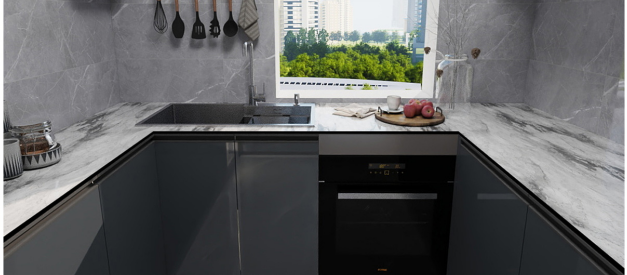
What Are Stone Countertops?
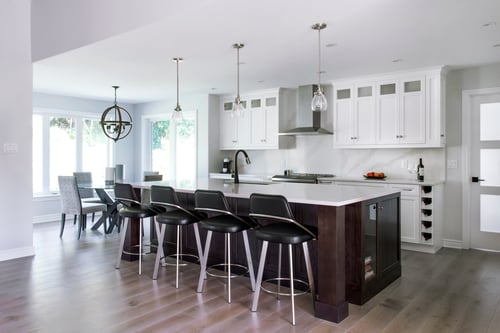
Stone countertops include natural and engineered stone materials such as granite, marble, quartz, and soapstone. These materials are widely used in kitchens, bathrooms, hotels, villas, luxury interiors, and high-end renovation projects.
Granite countertops: Known for durability, heat resistance, scratch resistance, and natural stone patterns.
Marble countertops: Valued for luxury appearance, natural veining, and timeless design appeal.
Quartz countertops: Engineered stone with a dense, non-porous surface and strong stain resistance.
Soapstone countertops: Heat-resistant natural stone that develops a distinctive patina over time.
Advantages of Phenolic Laminate Countertops
Cost-Effective Countertop Material
Phenolic laminate countertops are generally more budget-friendly than granite, marble, quartz, and other stone countertops. They are a practical choice for homeowners, rental property owners, schools, offices, restaurants, retail stores, and commercial projects that need attractive surfaces without a high material cost.
Durable and Moisture-Resistant Surface
Phenolic laminate is engineered for durability. It can resist daily scratches, impact, moisture, stains, and moderate heat exposure, making it suitable for busy kitchens, bathrooms, utility rooms, commercial counters, and high-use interiors.
Wide Range of Colors, Patterns and Stone-Look Designs
Phenolic laminate countertops are available in many finishes, including modern solid colors, wood grain, concrete effect, marble look, granite look, matte finish, textured surface, and custom decorative patterns. This design flexibility helps achieve both modern and classic interior styles.
Easy Cleaning and Low Maintenance
Phenolic laminate countertops are easy to clean with mild detergent and water. Unlike some natural stone countertops, they do not require periodic sealing, making them a low-maintenance option for busy households, rental units, and commercial environments.
Lightweight and Easier to Install
Compared with stone slabs, phenolic laminate is much lighter and easier to handle. This can reduce transportation difficulty, installation time, structural load, and labor requirements, especially in renovation projects or upper-floor installations.
Advantages of Stone Countertops
Premium Durability for Long-Term Use
Stone countertops, especially granite and quartz, are highly durable and can withstand heavy use for many years with proper care. They are commonly selected for high-end kitchens, luxury bathrooms, commercial counters, and premium residential projects.
Natural Luxury Appearance
Natural stone countertops provide a timeless and elegant appearance. Each slab has unique veining, color variation, and mineral texture, giving kitchens and bathrooms a one-of-a-kind luxury surface.
Increased Home Value
Stone countertops can increase the perceived value of a home. Buyers often view granite, marble, and quartz countertops as premium features, especially in kitchens and master bathrooms.
Heat and Scratch Resistance
Granite and quartz countertops provide strong resistance to scratches and heat in daily use. However, cutting boards and trivets are still recommended to protect the surface and extend service life.
Phenolic Laminate vs Stone Countertops: Key Comparison
| Comparison Factor | Phenolic Laminate Countertops | Stone Countertops |
| Cost | More affordable and suitable for budget-conscious renovations. | Higher upfront cost, especially for marble, granite, and quartz. |
| Appearance | Wide range of colors, patterns, woodgrain, concrete, and stone-look finishes. | Natural luxury appearance with unique veining and mineral depth. |
| Durability | Strong resistance to moisture, impact, scratches, and daily wear. | Excellent long-term durability, especially granite and quartz. |
| Maintenance | Easy to clean and no routine sealing required. | Some materials, such as marble and granite, may require periodic sealing. |
| Weight | Lightweight and easier to transport, cut, and install. | Heavy and requires professional handling and structural support. |
| Installation | Can be easier and faster to install, depending on project complexity. | Usually requires professional cutting, fitting, and installation. |
| Best Use | Rental properties, budget renovations, commercial counters, bathrooms, schools, offices, and lightweight projects. | High-end kitchens, luxury bathrooms, villas, premium homes, and outdoor stone applications. |
Important Factors When Choosing Countertops
Budget and Project Cost
Phenolic laminate countertops are often the better choice when budget control is important. Stone countertops require a higher initial investment, including material cost, fabrication, transportation, and professional installation.
Maintenance Requirements
Phenolic laminate countertops require minimal maintenance and do not need sealing. Stone countertops, especially marble and granite, may need periodic sealing and more careful cleaning to prevent stains, etching, or surface damage.
Aesthetic Preferences
If you want natural stone depth, unique veining, and a premium luxury feel, stone countertops may be the right choice. If you need a wide range of design options, consistent color, stone-look patterns, and more flexible customization, phenolic laminate can be a practical alternative.
Durability and Usage Frequency
For heavy cooking, hot cookware, and long-term premium kitchen use, granite or quartz may offer stronger performance. For bathrooms, rental properties, commercial counters, offices, and general residential use, phenolic laminate provides a durable and cost-effective surface.
Installation Conditions and Structural Load
Stone countertops are heavy and require professional installation. Phenolic laminate is lighter and easier to process, making it useful for renovation projects, high-rise buildings, modular furniture, and projects where structural load must be controlled.
Best Use Cases for Phenolic Laminate Countertops
Rental Properties and Apartments
For rental properties, apartments, and student housing, phenolic laminate countertops offer a cost-effective, durable, and attractive solution. They are easier to replace or repair if damaged and provide good value for property owners.
Budget Kitchen and Bathroom Renovations
Homeowners who want an updated look without the high cost of natural stone can use phenolic laminate countertops to achieve modern, clean, or stone-look designs at a lower project cost.
Commercial Counters and Public Interiors
Phenolic laminate is suitable for offices, restaurants, retail stores, schools, healthcare facilities, public counters, reception desks, and commercial bathrooms because it is durable, easy to clean, and available in many design options.
Bathroom Vanities and Moisture-Prone Areas
Phenolic laminate has good moisture resistance, making it suitable for bathroom vanity tops, washroom counters, and interior applications where water exposure and cleaning are common.
Best Use Cases for Stone Countertops
High-End Kitchen Countertops
For premium kitchen renovations, stone countertops offer luxury appearance, strong durability, and a long-lasting surface for cooking, entertaining, and daily use. Granite and quartz are especially popular for high-end kitchen countertops.
Luxury Bathroom Vanities
Marble, quartz, and granite countertops can add elegance and value to bathrooms. They are often used in master bathrooms, hotel bathrooms, villas, and premium residential interiors.
Outdoor Kitchens and Exterior Counters
Granite and some durable natural stones are suitable for outdoor kitchens because they can withstand weather exposure, heat, and heavy use when properly selected and installed.
Premium Real Estate and Resale-Focused Projects
Stone countertops are often viewed as a premium feature by buyers, making them a strong option for properties where resale value and luxury positioning are important.
Installation and Maintenance of Phenolic Laminate Countertops
Phenolic Laminate Countertop Installation
Phenolic laminate countertops can be easier to install than stone countertops because they are lighter and easier to process. Depending on the product type and project complexity, they may be suitable for professional installation or experienced DIY installation.
For best results, accurate measurement, proper cutting tools, clean edge treatment, suitable support, and correct fixing methods are important. Professional installation is still recommended for commercial projects and large countertop systems.
Phenolic Laminate Countertop Maintenance
Clean regularly with mild detergent and a soft cloth.
Avoid abrasive cleaning pads and harsh chemical cleaners.
Use cutting boards instead of cutting directly on the surface.
Use trivets or heat pads for hot cookware.
Wipe spills promptly to maintain surface appearance.
Installation and Maintenance of Stone Countertops
Stone Countertop Installation
Stone countertops usually require professional installation because they are heavy and need precise cutting, edge finishing, support, and fitting. Improper handling can cause cracks, chips, or poor alignment.
Stone Countertop Maintenance Tips
Sealing: Granite and marble countertops may require periodic sealing to protect against stains.
Cleaning: Use mild, non-abrasive cleaners and avoid harsh chemicals that may damage the stone.
Surface protection: Use cutting boards, trivets, and coasters to prevent scratches, heat marks, and stains.
Prompt spill cleaning: Acidic liquids can damage some natural stones, especially marble.
Which Countertop Material Is Right for You?
Choose Phenolic Laminate Countertops If:
You need a cost-effective countertop material.
You want a lightweight and easy-to-install surface.
You prefer low maintenance and no routine sealing.
You need many colors, patterns, textures, or stone-look designs.
You are renovating a rental property, apartment, bathroom, office, or commercial space.
You want a durable surface for general daily use without paying for premium stone.
Choose Stone Countertops If:
You want authentic natural stone beauty and unique veining.
You are designing a high-end kitchen, luxury bathroom, or premium home.
You have the budget for higher material and installation costs.
You need excellent long-term durability for heavy kitchen use.
You want to increase perceived home value with a premium countertop feature.
You are comfortable with professional installation and possible sealing maintenance.
Conclusion
Choosing between phenolic laminate and stone countertops depends on budget, appearance, maintenance, durability, installation conditions, and the intended use of the space. Phenolic laminate countertops are cost-effective, lightweight, versatile, moisture-resistant, and easy to maintain, making them ideal for budget renovations, rental properties, commercial spaces, bathrooms, and general interior projects.
Stone countertops, including granite, marble, quartz, and soapstone, provide natural beauty, strong durability, luxury appeal, and added property value. They are a better choice for high-end kitchens, premium bathrooms, outdoor kitchens, and projects where authentic stone aesthetics are the top priority.
By comparing cost, design, performance, maintenance, and installation requirements, you can choose the countertop material that best fits your project and creates the right balance of beauty, function, and long-term value.
FAQ About Phenolic Laminate vs Stone Countertops
What is the difference between phenolic laminate and stone countertops?
Phenolic laminate countertops are made from resin-impregnated kraft paper pressed into a dense surface material, while stone countertops are made from natural or engineered stone such as granite, marble, quartz, or soapstone. Phenolic laminate is lighter, more affordable, and easier to maintain, while stone offers natural luxury appearance and higher perceived property value.
Are phenolic laminate countertops good for kitchens?
Yes. Phenolic laminate countertops can be used in kitchens, especially for budget renovations, apartments, rental properties, and commercial food-service support areas. They offer good moisture resistance, stain resistance, and durability for daily use, but cutting boards and heat pads are recommended.
Are stone countertops better than phenolic laminate countertops?
Stone countertops are better for projects that require authentic luxury appearance, premium durability, and higher resale value. Phenolic laminate countertops are better for projects that need lower cost, lighter weight, easier installation, low maintenance, and more design flexibility.
Is phenolic laminate cheaper than granite or quartz?
In most cases, phenolic laminate is more affordable than granite, quartz, marble, and other stone countertop materials. It can also reduce installation and transportation costs because it is lighter and easier to process.
Do phenolic laminate countertops need sealing?
No. Phenolic laminate countertops generally do not require periodic sealing. This makes them easier to maintain than some natural stone countertops, such as granite and marble, which may need sealing to prevent stains.
Which countertop is better for bathrooms: phenolic laminate or stone?
Both can work well in bathrooms. Phenolic laminate is a good choice for cost-effective, moisture-resistant bathroom vanity tops and commercial washrooms. Stone is better for luxury bathrooms where natural beauty, premium feel, and long-term value are priorities.
Can phenolic laminate look like marble or granite?
Yes. Modern phenolic laminate can be produced with marble-look, granite-look, concrete-look, woodgrain, and other decorative finishes. It can create a realistic stone appearance at a lower cost than natural or engineered stone.
Which countertop material is easiest to maintain?
Phenolic laminate is usually easier to maintain because it does not require sealing and can be cleaned with mild detergent and water. Quartz is also low maintenance, while marble and granite may require more careful cleaning and periodic sealing.
Are stone countertops worth the higher cost?
Stone countertops can be worth the higher cost when the project requires luxury design, natural stone beauty, long-term durability, and increased property value. They are especially suitable for premium kitchens, bathrooms, villas, and high-end real estate projects.
Which countertop material is better for rental properties?
Phenolic laminate is often a better choice for rental properties because it is affordable, durable, easy to maintain, and easier to replace if damaged. It provides a clean and attractive countertop surface without the high upfront cost of stone.
 Русский
 English
 العربية
 Français
 Español
 Português
 Deutsch
 italiano
 日本語
日本語 한국어
한국어 Nederlands
 Tiếng Việt
 ไทย
ไทย Polski
 Türkçe
 አማርኛ
አማርኛ Bahasa Melayu
 தமிழ்
தமிழ் Filipino
 Bahasa Indonesia
 magyar
 Română
 Монгол
 қазақ
қазақ Српски
 हिन्दी
 فارسی
فارسی Kiswahili
 Slovenčina
 Slovenščina
 Svenska
 українська
 Ελληνικά
 Suomi
Suomi Հայերեն
 עברית
עברית اردو
اردو Shqip
Shqip বাংলা
বাংলা Hrvatski
 Afrikaans
 Māori
Māori සිංහල
සිංහල Oʻzbekcha
 latviešu
 Беларуская мова
 Bosanski
 Български
 ქართული
 Lietuvių
 Malti
Malti Runasimi